
October 20, 2026
Florida Nuisance Wildlife Laws by Species: What a Homeowner May and May Not Do
In Florida, a property owner may trap most nuisance wildlife without a license or permit. Rule 68A-9.010 then gives you 24 hours to release it where it was caught, release it on 40 or more acres in the same county with written permission, or euthanize it humanely. Bats, protected birds and listed species are off limits.
The details change with the animal, which is why this page goes species by species: a pigeon can't be relocated at all, bats can't be excluded for four months of the year, and a live venomous snake needs a state permit to move. Every rule below was read from the Florida Fish and Wildlife Conservation Commission (FWC) or the Florida Administrative Code on October 20, 2026, and each cell links to the page it came from. Below the table, each species gets its own section with the reasoning behind the rule.
Florida wildlife rules by species
"Trap" means a live trap or snare checked at least once every 24 hours, which is the only kind the nuisance rule allows without a permit. Steel traps, and a gun and light at night, need their own FWC permits. "Relocate" means moving the animal off the property where it was caught.
Scroll sideways to see all seven columns.
| Species | May a homeowner trap it? | May it be relocated, and where? | May it be killed? | Seasonal limits | Disease and handling | Rule and source |
|---|---|---|---|---|---|---|
| Armadillo | Yes. FWC says it is lawful for a landowner to live-trap a nuisance armadillo. | On the capture property, or on 40+ contiguous acres in the same county with the landowner's written permission. Public parks only with the land manager's written permission. | Yes, humanely. No gun and light permit is needed for armadillos; check city limits on firearms. | None. May be taken year-round. | FWC lists leprosy, St. Louis encephalitis, leptospires and arboviruses. Wear gloves. | FWC armadillo profile; FWC other wildlife regulations |
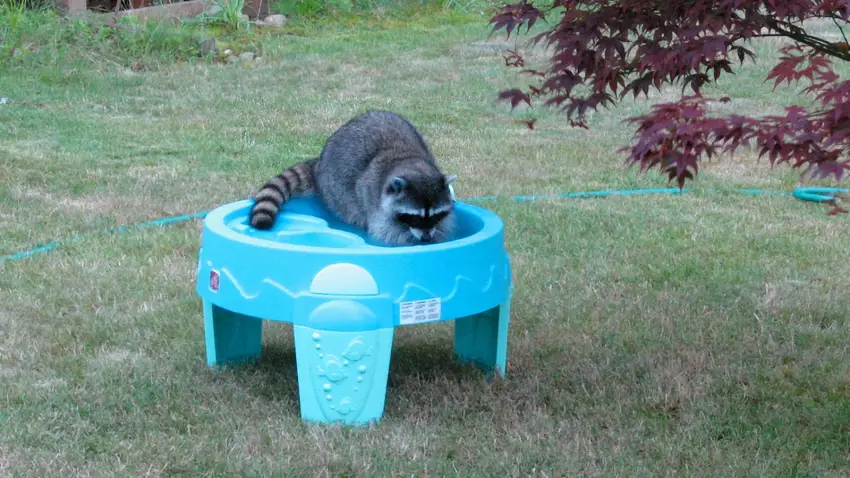
| Raccoon | Yes, with a live trap checked every 24 hours. | Same 40-acre, same-county, written-permission rule. A county rabies alert or quarantine overrides it. FWC advises trappers not to relocate raccoons. | Yes, by humane euthanasia within 24 hours of capture or the trap check. A gun and light at night needs an FWC permit. | None in the nuisance rule. | A main wildlife source of rabies in Florida. Latrines can hold roundworm eggs; wear gloves and burn or bury the feces. | Rule 68A-9.010; FWC raccoon roundworm; FDOH rabies |
| Opossum | Yes, with a live trap checked every 24 hours. | Same 40-acre, same-county, written-permission rule. | Yes, by humane euthanasia. A gun and light at night needs an FWC permit. | None in the nuisance rule. | A trapped female may have young in her pouch. Never handle a carcass bare-handed. | Rule 68A-9.010; FWC opossum profile |
| Gray squirrel | Yes. Fox squirrels may not be taken, so check which one you have. | Same 40-acre, same-county, written-permission rule. | Yes, by humane euthanasia. | None in the nuisance rule. Gray squirrels can breed up to twice a year and sometimes nest in attics. | Look for a nest of young before sealing the entry. | Rule 68A-9.010; FWC other wildlife regulations; FWC squirrel profile |
| Bats | No. Bats may not be taken as nuisance wildlife. Exclusion is the only legal method. | No. FWC says capturing and relocating bats is prohibited. A single bat loose in the house may be let out at any time of year. | No. Poison and fumigants are illegal on bats. | Exclusion is illegal April 16 to August 14. From August 15 to April 15, devices stay up at least four nights with lows forecast above 50°F. | A main wildlife source of rabies in Florida. Never handle a bat with bare hands. | FWC Bats in Buildings; Rules 68A-9.010 and 68A-4.001 |
| Non-venomous snakes | Yes, if it meets the nuisance definition and is not a listed species. The eastern indigo snake is federally threatened. | Same 40-acre, same-county, written-permission rule. | The rule allows humane take of an unlisted nuisance snake. FWC says there is no good reason to kill a snake. | None in the nuisance rule. | Identify it first. Some harmless species are protected, and some are mistaken for venomous ones. | FWC Living with Snakes; FWC indigo snake profile |
| Venomous snakes | Not without a permit in practice. Possessing or transporting a live venomous reptile requires an FWC captive wildlife permit. | Not without that permit. FWC exempts trappers who euthanize on site. | The nuisance rule does not protect an unlisted venomous snake. FWC advises killing one only when it poses immediate danger to people or pets. | None in the nuisance rule. | Six of Florida's 50 snake species are venomous. Keep your distance; FWC says they are not particularly dangerous unless stepped on or provoked. | FWC Nuisance Wildlife Permits; FWC Venomous Reptiles |
| Feral pigeons | Only with an FWC bird trap permit, unless you hold an FDACS Chapter 482 pest control license or certification. | No. Nonnative wildlife may not be moved off the capture site except to be euthanized. | Yes. The rock pigeon may be taken year-round. Check city limits on firearms. | None. | CDC says the histoplasmosis fungus is found in bird and bat droppings in parts of the U.S. Wear gloves and avoid raising dust. | FWC bird trap rule 68A-16.006; FWC Relocating Wildlife; FWC other wildlife regulations |
| Protected birds | No. Birds on the Migratory Bird Treaty Act list, bobwhite quail and wild turkey may not be taken as nuisance wildlife without a federal permit or depredation order. | No. | No. | The nuisance rule has no open season for them. | Same droppings caution as pigeons. | Rule 68A-9.010(1)(c); FWC Nuisance Wildlife Permits |
The table covers private residential property. Rules on wildlife management areas, public land and inside some city limits can be stricter, and a county rabies alert or quarantine overrides the transport rules for every species.
Do you need a license to trap nuisance wildlife in Florida?
No. There is no Florida trapper license, for a homeowner or for a company. The FWC says so on its own Nuisance Wildlife Control Operator Registration page: it does not license nuisance wildlife trappers. What exists instead is a voluntary directory. Operators may ask to have their name and counties listed, and the FWC is explicit that those listed are not regulated by the FWC but must follow all applicable rules. Plenty of wildlife companies, this one included until recently, have told customers they hold a state trapper license. Nobody does, because it does not exist.
One species breaks the pattern. Only a licensed nuisance alligator trapper may take an alligator, which is why an alligator call goes to the Statewide Nuisance Alligator Program and not to a wildlife company.
If a license is not the constraint, two things are: the method you use, and what happens to the animal afterward.
What can you legally do with a trapped animal in Florida?
One of three things, and nothing else, all within 24 hours of the capture or the trap check. This is the part homeowners break most often, and it is governed by rule 68A-9.010:
- Release it on the property where it was captured.
- Release it off site, but only where the release site is at least 40 contiguous acres, is in the same county as the capture site, and you hold written permission from that landowner.
- Euthanize it humanely, following the AVMA Guidelines for the Euthanasia of Animals.
Driving a raccoon to a park on the other side of the county line is not on that list. Neither is letting it go in the patch of woods behind a subdivision, because a patch of woods is not 40 contiguous acres. It is the most common illegal act in Florida wildlife work, and it is almost always done by someone trying to be kind.
The FWC position sits above all of this: trapping and relocating or killing native wildlife should be a last resort. Sealing the entry point is what ends the problem, which is why humane removal and exclusion are one job rather than two.
Armadillos
FWC's own armadillo profile says it is lawful for a landowner to live-trap or humanely destroy a nuisance armadillo, and that a trapped one must be euthanized, released on site, or released on a property of 40 acres or more in the same county with the owner's written permission. FWC also notes they are hard to catch in live traps, and suggests a spotlight or radio near the burrow to persuade the animal to leave, without blocking its exit. Our guide to armadillo removal, trapping laws and yard damage covers the rest.
Raccoons
Raccoons fall under the standard nuisance rule, 68A-9.010, with its 24-hour deadline and 40-acre relocation test. What sets them apart is health risk. The Florida Department of Health names raccoons and bats as the main wildlife sources of rabies in the state, and FWC's raccoon roundworm page lists nuisance trappers among the people at risk and tells them not to relocate raccoons. If you have a latrine in the attic, read is raccoon poop dangerous before you clean it up. For how a job runs from the first call, see our raccoon removal page.
Opossums
Opossums follow the same rule and the same three outcomes as raccoons. One practical point from FWC's opossum profile: females have at least two litters a year and carry the young in a pouch for about 80 days, so a trapped female may not be alone. Opossums are also the animal most often trapped for no reason. One under a deck in December is usually sheltering rather than nesting, and it tends to leave on its own once the weather turns, as long as the gap is closed behind it. More on our opossum removal page.
Rats and mice
Roof rats, Norway rats and house mice are not native wildlife, so the rules that govern a raccoon do not apply to them. They are handled as structural pests, and they are the one group where a pest control company and a wildlife company genuinely overlap. The building work does not change: rodent control without sealing the entry points is a subscription, not a repair. Our rodent removal page covers how we close a house to them.
Gray squirrels
A gray squirrel damaging your house can be trapped under 68A-9.010 like any other nuisance mammal. The fox squirrel is different: FWC's other wildlife regulations say fox squirrels may not be taken or pursued, so it is worth a second look at the animal before you set a trap. FWC also notes that gray squirrels can breed up to twice a year and will nest in attics, which is why we check for young before closing an entry. More on our squirrel removal page.
Bats
Bats are the strictest row in the table. Under rules 68A-4.001 and 68A-9.010, FWC's Bats in Buildings page says it is illegal to evict or exclude bats during maternity season, April 16 to August 14, and that capture and relocation are prohibited at any time. Exclusion with one-way devices is the only legal method, and it can only happen from August 15 to April 15. Our post on Florida bat removal laws walks through the timing, and our bat removal page covers how an exclusion is done.
Non-venomous snakes
FWC's Living with Snakes page says there is no good reason to kill a snake except when a venomous one poses immediate danger, and that a snake in your yard today may be far away tomorrow. A non-venomous snake that meets the nuisance definition can be trapped and released under the same rule as a raccoon, but listed species are off limits: the eastern indigo snake is federally threatened and protected under Florida's endangered and threatened species rule. Our Central Florida snake species guide helps with identification, and our snake removal page covers what we do once it is identified.
Venomous snakes
The nuisance rule doesn't single out venomous snakes, but FWC's nuisance wildlife permits page does: anyone transporting or possessing a live venomous reptile needs a captive wildlife permit. FWC's venomous reptiles page adds that trappers who will hold a live one need that permit, and those who euthanize on site don't. So catching one in a bucket and driving it to the woods isn't legal without a permit. Florida has six venomous species, and our venomous snake guide shows how to tell them apart. If one has turned up at your Orlando home, leave it where it is and see snake removal in Orlando for what to do until someone arrives.
Feral pigeons
Rock pigeons are nonnative, and that changes two things. FWC's other wildlife regulations allow them to be taken year-round, but its Relocating Wildlife page says nonnative nuisance wildlife may not be moved off the capture site except for humane euthanasia. Trapping them also needs paperwork: rule 68A-16.006 prohibits bird traps without an FWC permit unless you hold certain FDACS pest control licenses, and every trap must be labeled.
Protected birds
Rule 68A-9.010 excludes every bird listed under the federal Migratory Bird Treaty Act, plus bobwhite quail and wild turkey, from nuisance take unless the U.S. Fish and Wildlife Service has authorized it by permit or depredation order. The Muscovy duck is the one FWC carves out: its nuisance wildlife FAQ says federal rules let landowners control them without permits, but captured birds may not be released elsewhere. More on our bird removal page.
Skunks
Skunks fall under the same rule and the same three outcomes as raccoons and opossums. The practical limit is structural, not legal. A skunk denning under a shed or mobile home skirting is there because the skirting has a gap, and a removal that does not close it is temporary by design.
When the law requires a professional
Almost never by name. FWC does not license wildlife trappers, and its FAQ says property owners don't need to notify FWC or get its authorization to take most nuisance wildlife from private property. What the law requires in some cases is a permit, and that applies to a company as much as to you:
- Possessing or moving a live venomous snake (FWC captive wildlife permit).
- Taking any bird protected by the Migratory Bird Treaty Act, or any state-listed species (federal or FWC permit).
- Using steel traps, or a gun and light at night (FWC permits).
- Trapping pigeons or other nonnative birds (FWC bird trap permit, unless FDACS-licensed).
- Nuisance alligators, deer, bears and bobcats, which FWC lists among the animals whose take is prohibited or needs additional permits.
If you are unsure which row your animal falls in, FWC suggests calling your regional office before you trap. For who handles what in each Central Florida county, see who to call for wildlife in Central Florida.
What can a homeowner do without a permit or a trapper?
More than most people assume. You may trap most nuisance species on your own property without a permit or notification. You may seal entry points at any time, for any species except bats inside the maternity window. You may remove attractants, cut back the branch that bridges to your roofline, and cap the chimney.
What you may not do is decide the animal's fate outside the three outcomes in 68A-9.010, use a steel trap or a gun and light without the permit, touch a bat colony between April 16 and August 14, take a protected bird or an active nest, move a live venomous snake without a captive wildlife permit, or handle an alligator at all. The paperwork barrier is far lower than the industry implies, and the standard of conduct is far higher.
How we handle it
Most of our work is the part the rules push you toward anyway: finding how the animal got in and sealing it so the next one can't. We inspect first, identify the species, and pick the method the law allows for it. Bat jobs get booked for August 15 through April 15, and we look for young before closing any entry. Our humane critter removal page explains the process.
Found an animal and not sure what's legal?
We'll identify it, tell you what the rules allow, and quote the removal and repair as one job.
Methodology and sources
Every rule on this page was read on October 20, 2026, from the Florida Fish and Wildlife Conservation Commission's website (myfwc.com) and from the text of rule 68A-9.010, F.A.C. on flrules.org. Each table cell links the page it came from. The sections on licensing, the three lawful outcomes, rats and mice, and skunks were first published in a separate guide, reviewed against the FWC operator registration and nuisance wildlife FAQ pages on September 25, 2026, and folded into this page on November 1, 2026. The rabies statement comes from the Florida Department of Health and the droppings caution from the CDC. Where FWC's own pages differ, as the Bats in Buildings page does when it gives maternity season as both "April 15 to August 15" and "April 16 to August 14," we used the dates in the rule.
This is a summary, not legal advice. Rules change, and a listed species or an active nest is worth a call to FWC before anyone sets a trap.
You may republish this information with attribution and a link to https://drcritter.com/blog/florida-wildlife-laws-by-species/.
Quoting a rule? Cite this page ShowHide
Dr. Critter Wildlife Control. "Florida Nuisance Wildlife Laws by Species: What a Homeowner May and May Not Do." Rules checked October 20, 2026. https://drcritter.com/blog/florida-wildlife-laws-by-species/
Link: <a href="https://drcritter.com/blog/florida-wildlife-laws-by-species/">Florida Nuisance Wildlife Laws by Species</a>, Dr. Critter Wildlife Control
Florida Nuisance Wildlife Laws by…


Does Homeowners Insurance Cover…
October 13, 2026
Armadillo Holes in Your Florida…
October 6, 2026


Who to Call for Wildlife in…
September 22, 2026
Florida Rabies Cases by County and…
September 15, 2026


Wildlife Removal Cost in Central…
September 15, 2026
Wildlife Removal vs Pest Control:…
August 11, 2026


Central Florida Wildlife Activity…
August 11, 2026
Rats in Your Attic Could Be More…
August 5, 2026


Does Homeowners Insurance Cover…
July 21, 2026

