October 6, 2026
Who to Call for Wildlife in Central Florida: County Animal Services, FWC, or a Nuisance Wildlife Control Operator
Your county animal services department will not come and take the raccoon out of your attic. In most of Central Florida it says so on its own website, and in the rest it simply does not offer the service. The Florida Fish and Wildlife Conservation Commission writes the rules that govern wildlife removal and gives advice about it, but it does not send anyone to your house either. What is left is you, or somebody you hire.
That leaves a lot of people calling the wrong number first. This page puts the split in one place for every county Dr. Critter serves: what the county agency handles, what it says about wildlife in its own words, which Florida Fish and Wildlife Conservation Commission regional office covers you, and where Florida rule 68A-9.010 draws the line. Every phone number and address below was read from the agency's own website on September 22, 2026, and the page for each one is linked in its row.
Who handles what, county by county
One row per county. The agency name is the one the agency uses for itself, which is not always what residents call it, and the "wildlife" column quotes or closely paraphrases what that agency publishes rather than what a reasonable person might assume. Five of these fourteen counties publish nothing at all about wildlife, which is an absence of a statement rather than a statement, and the column says so instead of filling the gap.
Rule 68A-9.010 is not a column because it does not vary by county. It is state rule and it applies identically in all fourteen; the section below covers it.
| County | Animal services agency and shelter address | Phone | What it publishes about nuisance wildlife | FWC regional office |
|---|---|---|---|---|
| Orange | Orange County Animal Services 2769 Conroy Road, Orlando, FL 32839 | (407) 836-3111, or dial 311 | Says it directly: "We do not trap nuisance wildlife... If the presence of wildlife has escalated to the point you feel it is a nuisance and would like to have it removed, please consult with a private trapper." It does aid injured wildlife. | Northeast, Ocala 352-732-1225 |
| Seminole | Seminole County Animal Services 232 Eslinger Way, Sanford, FL 32773 | Dispatch 407-665-5110 Front office 407-665-5201 | Splits domestic from wild. For a wild animal it sends residents to the FWC website and notes that "several licensed trapping companies provide these services for a fee". Its trap-loan program is worded for dogs and cats. | Northeast, Ocala 352-732-1225 |
| Osceola | Osceola County Animal Services 3910 Old Canoe Creek Rd, St Cloud, FL 34772 | 407-742-8000 Field operations ext 4 | Declines wildlife species by species rather than in one sentence: no wild hogs ("you will need to contact a nuisance trapper"), no alligators in their natural habitat, no adopting out "squirrels, raccoons or other wildlife". It also does not lend traps to the public. | Northeast, Ocala 352-732-1225 |
| Polk | Polk County Animal Control, run by the Sheriff's Office 7115 de Castro Road, Winter Haven, FL 33880 | (863) 577-1762 Toll free 1-888-275-8941 | Draws the sharpest line of the fourteen. It responds to non-domesticated animals "involving a bite or attack", particularly rabies carriers, but "does not respond to nuisance wildlife calls or remove trapped nuisance wildlife". | Southwest, Lakeland 863-648-3200 |
| Lake | Lake County Animal Shelter 12280 County Road 448, Tavares, FL 32778 | 352-343-9688 | Goes furthest of any county here: "The Lake County Animal Shelter does not provide field services or handle nuisance wildlife." No field operation at all, for wildlife or anything else. | Northeast, Ocala 352-732-1225 |
| Volusia | Volusia County Animal Services 2120 E. International Speedway Blvd., DeLand, FL | 386-248-1790 Dispatch 386-248-1777 | Publishes nothing about nuisance wildlife on its animal services pages. It does state that it covers the unincorporated county plus Oak Hill and Pierson, and routes city residents to their own city agency. A separate county wildlife contacts page points wildlife concerns to FWC. | Northeast, Ocala 352-732-1225 |
| Brevard | Brevard County Sheriff's Office Animal Services Unit Animal Care Center, 5100 W. Eau Gallie Blvd., Melbourne, FL 32935 | Administration 321-633-2105 Complaints 321-633-2024 | Publishes nothing about nuisance wildlife, private trappers or FWC on any of its animal pages, including its FAQ. The unit describes itself as covering animal complaints countywide and maintaining resources including wildlife facilities. | Northeast, Ocala 352-732-1225 |
| Marion | Marion County Animal Services 6405 W. Hwy 40, Ocala, FL 34482 | 352-671-8700 Animal Control 352-671-8727 After hours 352-732-9111 | The exception on this page. Marion's Animal Control does handle some wildlife: "the wildlife handled by Animal Control will include smaller nuisance animals, such as raccoons, who pose a public health concern." Larger wildlife, naming coyotes, bears and alligators, goes to private trappers or FWC. | Northeast, Ocala 352-732-1225 |
| Sumter | Sumter County Animal Services 819 CR 529, Lake Panasoffkee, FL 33538 | 352-689-4400 Complaints option 3 After hours option 9 | The only county here with a dedicated nuisance wildlife page. "Animal Services (AS) generally deals only with domestic animals. Domestic animals exclude wildlife and exotic animals." It refers residents to FWC in Ocala and to private trappers, and will go out only when the county Health Department asks it to over an exposure. | Northeast, Ocala 352-732-1225 |
| Highlands | Highlands County Sheriff's Office Animal Services 7501 Haywood Taylor Blvd., Sebring, FL 33870 | 863-402-6730 Emergencies, Sheriff 863-402-7200 | Publishes nothing about wildlife. The page carries location, hours and adoptable animals and no scope-of-service statement at all. The county commission's old animal control page is gone, so the Sheriff's Office is the only agency to ask. | Southwest, Lakeland 863-648-3200 |
| DeSoto | Desoto County Animal Services 2048 NE McKay Street, Arcadia, FL 34266 | 863-993-4855 After hours, Sheriff 863-993-4700 | Never uses the word wildlife. Its stated responsibilities cover strays, unwanted pets, "nuisance domestic animals", neglect and abuse, animals at large, and sick or injured animals. The qualifier "domestic" is as close as the page comes to excluding wildlife. | Southwest, Lakeland 863-648-3200 |
| Hardee | Hardee County Animal Services, run by the Sheriff's Office 685 Airport Road, Wauchula, FL 33873 | (863) 773-4144 Kennel office 863-773-2320 | Publishes nothing about wildlife. The unit's stated scope is "at-large livestock, equine, and domesticated animals". Bowling Green and Wauchula run their own animal control inside city limits, at (863) 375-2255 and (863) 773-3265. | Southwest, Lakeland 863-648-3200 |
| Indian River | Indian River County Animal Control, a division of Emergency Services 4305 43rd Ave # B, Vero Beach, FL 32967 | (772) 226-4799 Inside Vero Beach city limits, VBPD 772-978-4600 | Never writes the exclusion sentence but gets to the same place. Its stated function is limited to "domestic animals", and every contact it lists under "Non-domestic animals / Nuisance wildlife" is an FWC number. | Northeast, Ocala 352-732-1225 |
| St. Lucie | St. Lucie County Animal Safety, Services & Protection Division 3404 West Midway Road, Fort Pierce, FL 34982 | Office 772-462-8120 Dispatch 772-465-5770 | States it outright: the division "cannot provide this service" for nuisance wildlife, and "a resident may contact a licensed wildlife trapper to remove nuisance wildlife" at their own expense. Anything healthy found in a trap is released on the same property. Wildlife calls after hours revert to FWC. | South, West Palm Beach 561-625-5122 |
What the pattern across these counties tells you
A few things show up when you read the table straight through that no single county's website would tell you.
The agency is often not the county. In Polk, Brevard, Highlands and Hardee, animal services is run by the Sheriff's Office rather than by a county department, and in DeSoto after-hours calls route to the Sheriff. In Highlands and Hardee the county commission's own site has no animal page at all any more, so somebody searching the county website for animal control finds nothing and concludes the service does not exist. It does. It is filed under law enforcement.
Silence is not a policy. Volusia, Brevard, Highlands, DeSoto and Hardee publish nothing about nuisance wildlife, which leaves you phoning to find out rather than reading. The seven counties that do publish a line all say a version of the same thing, so the silent five are probably no different, but this page is not going to assert what those agencies have not.
Marion is the one that genuinely breaks the pattern, and it is worth knowing if you live there. Marion County Animal Control says it handles smaller nuisance animals such as raccoons where there is a public health concern, and refers only larger wildlife onward. If a raccoon in Ocala is behaving oddly or has had contact with a person or a pet, 352-671-8727 is a real option in a way it is not in Orange or Lake.
The softer version of that exception exists almost everywhere. Several counties that will not remove a nuisance animal will still respond to a bite, an attack, or a suspected rabies exposure. Polk says so outright, Sumter goes out when its Health Department asks it to, and St. Lucie takes sick or injured wildlife to a rehabilitation facility. Health risk is the thing that moves an animal back into county jurisdiction.
The table also cannot show you which agency your own address falls under, and in four of these counties that is a live question. Before assuming the county number is the right one, work out whose jurisdiction you are in; the last question below covers how that splits.
When it is a wildlife operator's job, and what the rule actually says
The line the counties are all pointing at is Florida Administrative Code rule 68A-9.010, "Taking Nuisance Wildlife". FWC defines nuisance wildlife as an animal "that causes (or is about to cause) property damage, presents a threat to public safety, or causes an annoyance within, under or upon a building", and the rule opens by handing the problem to the property owner: "Any person owning property may take nuisance wildlife or they may authorize another person to take nuisance wildlife on their behalf."
So a raccoon in an attic, a rat in a soffit, an armadillo under a slab, a skunk behind manufactured-home skirting: those are the owner's to solve, either personally or through somebody hired to do it. The county sending you elsewhere is the division of labor the rule sets up, rather than anybody dodging the call.
What the rule does constrain is method and outcome. Steel traps and gun-and-light are prohibited methods without a separate permit. Live traps must be checked at intervals no longer than 24 hours. And once an animal is in a trap alive, there are three lawful outcomes and no others, all of which have to happen within 24 hours of the capture or of the trap being checked:
- Release it on the property where it was caught, where the capture and release sites are one contiguous piece of land.
- Release it off site, but only where all of the following hold together: the animal is a native species, the receiving property is inside the county of capture, it runs to at least 40 contiguous acres, and the person releasing it holds that owner's written permission at the moment of release.
- Euthanize it humanely, by a method the American Veterinary Medical Association or the American Association of Zoo Veterinarians accepts.
Driving the animal to a park, a patch of woods behind a subdivision, or anywhere across a county line is not on that list. A patch of woods behind a subdivision is not 40 contiguous acres and it is not yours, which rules out the disposal most people picture when they picture humane removal.
Some species come out of the nuisance rule entirely. Bears, deer, bobcats and bats may not be taken as nuisance wildlife, nor may birds protected by the Migratory Bird Treaty Act, bobwhite quail, wild turkey, or anything listed in Chapter 68A-27. Bats have their own window inside that: exclusion is lawful from August 15 through April 15 and prohibited from April 16 through August 14, and before permanent repairs an exclusion device has to run at least four consecutive nights for which the National Weather Service forecasts lows above 50°F. Gopher tortoises and their burrows are separately protected, and FWC counts any work within 25 feet of a burrow as a disturbance needing a relocation permit. Alligators are their own path altogether, on 866-392-4286.
This is the work Dr. Critter does, and the reason the inspection comes before the quote is that the species determines which of the rules above applies before anyone decides what to do. Our humane wildlife removal page sets out how a job is inspected, quoted and warranted.
How to check out a wildlife company in Florida, when there is no license to check
Almost everybody has this part wrong, including a fair number of people working in the trade. Florida does not license nuisance wildlife trappers. FWC states this in three separate places on its own site, in three slightly different wordings: "The FWC does not license nuisance wildlife control operators", "The FWC does not license wildlife trappers", and "The FWC does not license nuisance wildlife trappers, but does allow them to advertise their services on our web site."
Several of the county pages quoted above tell residents to hire a "licensed wildlife trapper". The counties mean well and they are describing a credential that does not exist.
What does exist is the Nuisance Wildlife Control Operator Directory, a list an operator adds themselves to by filling in a web form, choosing the counties they are willing to work in, and renewing annually before listings expire on July 1. There is no exam, no bond, no insurance requirement and no background check anywhere in that process. FWC describes it plainly as a courtesy: "As a service to the public FWC will continue to let Nuisance Wildlife Control Operators list their services on its web site." Being in the directory means somebody filled in a form. It is worth checking, and it is worth understanding for exactly what it is.
Two real licenses do exist nearby, and confusing them with a trapper license is how the myth survives. Commercial work on rats and mice inside a structure requires a pest control license from the Florida Department of Agriculture and Consumer Services, which is a genuine license from a different agency. And nuisance alligator trappers are licensed and contracted by FWC; "Only a licensed nuisance alligator trapper may capture or remove an alligator."
So if there is no license to ask for, ask for the things that do exist:
- Liability insurance and workers' compensation. Somebody is going to be on your roof and in your attic, and this is the question the license question is really standing in for.
- A written scope that includes sealing the entry points, and the warranty on that sealing. Trapping on its own guarantees a repeat visit, because the hole is still there.
- What they intend to do with the animal. If the answer is "we relocate them", ask where, then compare it against the three lawful outcomes above. A company promising to release your raccoon out in the country is telling you it plans to break rule 68A-9.010, or that it has not read it.
- Whether the species changes the timing. An operator offering to remove bats in June is offering something Florida prohibits between April 16 and August 14.
- Their listing in the FWC directory, understood as a listing rather than a license.
Common questions
Is there a single statewide number for nuisance wildlife in Florida?
No, and this catches people out. FWC runs two statewide lines, and neither is for nuisance wildlife. 888-404-FWCC (888-404-3922) is the Wildlife Alert hotline, for reporting wildlife law violations and for sick or injured wildlife. 866-FWC-GATOR (866-392-4286) is for nuisance alligators. For everything else, FWC routes people to their regional office, which for most of Central Florida is the Northeast regional office in Ocala on 352-732-1225, or to its online Wildlife Interactions Reporting Form. Those offices give advice from conflict mitigation biologists. They do not dispatch anybody to your house.
Who removes a dead animal from the road, or from my yard?
Different departments, and only three of the fourteen counties publish an answer at all. Sumter County states the pattern most clearly: Public Works handles a dead animal in the roadway or right of way, "unless the animal is on private property or on a private road. If the dead animal is on private property, the property owner handles removal and disposal." Osceola County names its Road and Bridge Department on 407-742-7500 for rights of way, with separate numbers for Kissimmee on 407-518-2506 and St. Cloud on 407-957-7357. Seminole County takes reports of a dead animal in the roadway through animal services dispatch on 407-665-5110. The other eleven counties publish nothing either way, so in those you are phoning to find out. No county in this list publishes a policy for a dead animal on private property except Sumter, which says it is yours.
Can I trap the animal myself and release it somewhere else?
You can trap it yourself on your own property. Where you may release it is the part that trips people up, and the three outcomes above are the whole of it: an off-site release is lawful only if the animal is native, the land is in the same county, it is at least 40 contiguous acres, and you are holding that landowner's written permission when you open the trap. A rabies alert or quarantine issued by a county health department overrides the transport permission entirely, which matters here because raccoons and bats are Florida's principal rabies vector species. Also worth knowing before you set a trap: several counties will not come and collect what you catch. St. Lucie says its officers "are not permitted to remove or relocate healthy wildlife; the animal will be released from the trap or container on site", and Osceola does not lend traps to the public at all.
What if my property is inside a city rather than the unincorporated county?
Then the county number in the table may not be yours. Volusia County Animal Services covers the unincorporated county plus Oak Hill and Pierson, and routes city addresses through its communication center on 386-248-1777. Indian River sends anything inside Vero Beach city limits to the police department on 772-978-4600. Hardee County lists separate animal control for Bowling Green and Wauchula. St. Lucie warns that three agencies operate inside the county and suggests calling to confirm which covers you. For wildlife specifically this rarely changes the answer, because the city agencies decline it for the same reason the county ones do, but it changes who you talk to about a stray, a bite or a dead animal in the road.
Sources
Every county row links the agency page it was read from. The rules and the FWC material on this page come from: rule 68A-9.010, F.A.C. and rule 68A-4.001, F.A.C. as published in the Florida Administrative Code; FWC's Removing Nuisance Wildlife, nuisance wildlife FAQs, trapper registration, gopher tortoise permits and regional offices pages.
Rule 68A-9.010 has been in its current form since 2010, and FWC published a notice of proposed amendment to the trapping regulations in April 2026 that had not been adopted when this page was compiled. If you are reading this well after the date above, check the rule page before relying on the detail.
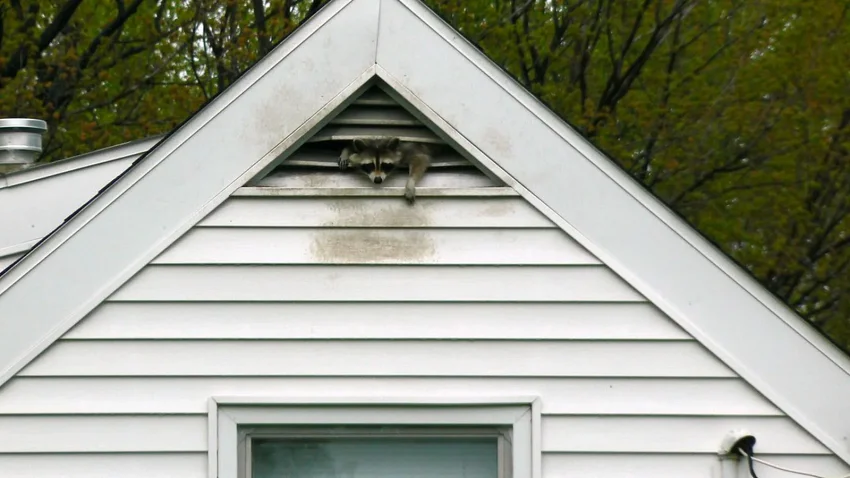
Photo by Benimoto on Openverse, license CC BY 2.0.
Cite this page
Plain text
Dr. Critter Wildlife Control. "Who to Call for Wildlife in Central Florida: County Animal Services, FWC, or a Nuisance Wildlife Control Operator." Published September 22, 2026. https://drcritter.com/blog/who-to-call-for-wildlife-in-central-florida/
Link
Embed this table
Paste this into your own page. The source line is part of the snippet and has to stay with it.
Methodology and reuse
Every phone number, address and scope statement in the table was read from that agency's own website on September 22, 2026, and each row links the page it came from. Nothing is taken from a directory site, an aggregator or a search result summary. Where an agency publishes no statement about wildlife, the table says so rather than inferring one from the rest.
The rule text comes from the adopted Florida Administrative Code: rule 68A-9.010 for taking and disposition of nuisance wildlife and the bat exclusion window, and rule 68A-4.001 for the general prohibition that protects native wildlife by default. FWC's position that it does not license nuisance wildlife trappers is quoted from three of its own pages. Note that FWC published a notice of proposed amendment to the trapping rules in April 2026 which had not been adopted when this page was compiled.
County agencies reorganize, move and change numbers. If you are reading this long after the date below, follow the row's source link before relying on a phone number.
Published September 22, 2026. You may republish these figures with attribution and a link to https://drcritter.com/blog/who-to-call-for-wildlife-in-central-florida/.
Armadillo Holes in Your Florida…


Who to Call for Wildlife in…
September 22, 2026
Florida Rabies Cases by County and…
September 15, 2026


Wildlife Removal Cost in Central…
September 15, 2026
Florida Nuisance Wildlife Trapping…
August 18, 2026


Wildlife Removal vs Pest Control:…
August 11, 2026
Central Florida Wildlife Activity…
August 11, 2026


Rats in Your Attic Could Be More…
August 5, 2026
Does Homeowners Insurance Cover…
July 21, 2026


Bat Removal in Central Florida:…
July 9, 2026