Click Here to get a free Attic Animal Removal phone estimate
Animal Removal From Your Attic in Central Florida
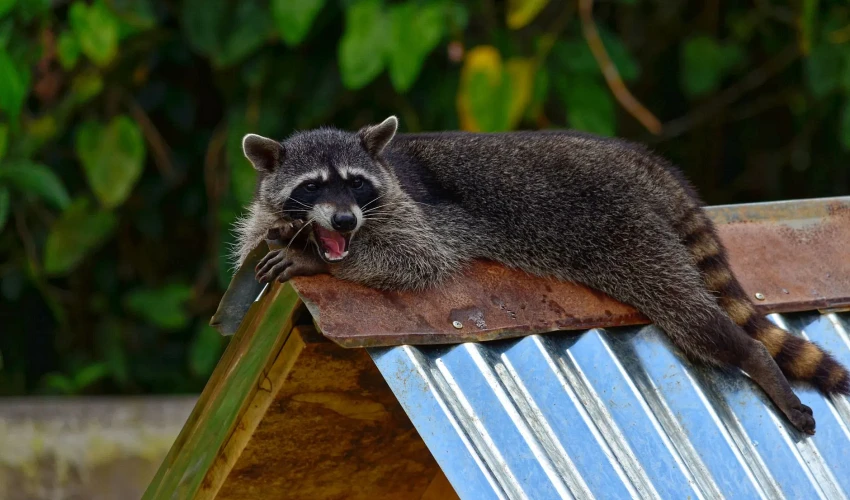
Animal removal from an attic means getting the live wildlife out first, then sealing the openings so nothing gets back in. Dr. Critter removes the live animals from your attic — squirrels, raccoons, rats, bats, and opossums — and seals the roofline gaps they used to get in. Hearing scratching overhead, finding droppings in the attic, or watching something disappear into a soffit at dusk? We have done this across Central Florida since 1996, and most attic calls get a same-day inspection.
Critter removal from the attic, animal in attic removal, attic wildlife exclusion. Those are all names for the same job: get the live animal out, then close the way it got in. This page is about getting an animal that is living in your attic out. If you are still trying to figure out what you are hearing, start with our guide to identifying attic noises. If the animal has already died and you are dealing with an odor, see dead animal removal.
How do professionals get an animal out of your attic?
Attic animal removal in Central Florida follows a fixed five-step sequence: First, a no-charge inspection identifies the species and finds every entry point — this matters because the right method depends entirely on what is up there. Second, the animals are removed by live trapping or, for bats, one-way exclusion devices that let them leave but not return. Third, once the attic is confirmed empty, every gap, chew point, and roofline opening is sealed with materials matched to your structure. Fourth, contaminated insulation and droppings are cleaned out and the space is sanitized. Fifth, the sealed entries are registered under a lifetime warranty. Skipping the sealing step is the single most common reason animals reappear weeks later, and it is why removal-only services from generalist pest companies tend to fail. Dr. Critter handles all five steps as one quoted job, with same-day response available on most Central Florida calls.
- Free attic inspection — We identify the species, locate the animals, and map entry points. No charge, no obligation.
- Humane removal — Live trapping or one-way exclusion, depending on the species and Florida law.
- Entry-point sealing — Every opening sealed with matched materials, backed by a lifetime warranty.
- Cleanup & decontamination — Soiled insulation removed, surfaces sanitized, damage assessed.
- Warranty & follow-up — Sealed entries registered; we come back at no charge if anything gets in through one we sealed.
Where the house is changes step one more than homeowners expect. A 1970s block ranch under barrel tile gives a raccoon a completely different way in than a newer subdivision with vinyl soffit, which is why animal control in DeLand and our Clermont team spend most of an inspection on the roofline before anyone sets a trap.
What animal is in my attic?
Five species account for nearly every attic intrusion we handle in Central Florida. Squirrels are the most common — they are active during the day, chew constantly, and gnaw electrical wiring, which is a genuine fire risk. Roof rats are next, breeding year-round in the warm climate and nesting in insulation. Raccoons cause the most damage per visit, tearing open soffits and vents and often denning with a litter, so a single raccoon call frequently means several animals. Bats are a protected species handled by exclusion only, never trapping. Opossums use existing openings to shelter and tend to leave droppings and a strong odor. The correct removal method differs sharply by species — trapping a squirrel is nothing like excluding a maternal bat colony — which is why accurate identification during the inspection drives everything that follows.
- Squirrels: Daytime activity, constant chewing, wire damage. The most frequent attic intruder in Central Florida.
- Rats & roof rats: Year-round breeders that nest in insulation and travel wall voids. Sealing entry points is essential.
- Raccoons: The heaviest attic damage, often a mother with a litter. Requires careful, humane handling.
- Bats: Protected in Florida — exclusion only, and never during the maternity season (April 16–August 14).
- Opossums: Shelter-seekers that leave droppings and odor. Usually enter through openings other animals made.
What are the signs of an animal in your attic?
The timing and type of noise narrows down what is in your attic before anyone climbs up. Scratching and scampering during daylight points to squirrels; the same sounds after dark suggest rats or, if heavier and slower, raccoons. A rhythmic chittering or scratching near a gable or soffit at dusk often means bats leaving to feed. Beyond noise, look for droppings concentrated along beams or insulation, dark grease marks where animals squeeze through gaps, chewed wood or wiring, a sudden musky or ammonia odor, and stained or flattened insulation. Daytime sightings of an animal entering the roofline are the clearest sign of all. The longer an intrusion goes unaddressed, the more insulation is soiled and the higher the chance of wiring damage, so identifying it early keeps the job smaller.
Not sure what you are hearing? Our attic noise identification guide walks through the sounds species by species, and this post on attic scratching covers the most common culprits.
Why don’t DIY traps and poison work?
Store-bought traps and poison treat the symptom and leave the cause wide open. Poison is the worst option for an attic animal: it kills the animal somewhere inside the structure, which creates a decomposition odor and a secondary pest problem, and it does nothing to close the opening the next animal will use. Snap traps and live traps placed without finding the entry points catch one or two animals while the rest keep coming, and a trapped mother leaves a litter behind to starve. DIY exclusion also routinely violates Florida law for bats, which can only be excluded outside maternity season using one-way devices. Professional removal works because it is sequenced correctly — identify the species, remove every animal humanely, then permanently seal the structure so the problem ends instead of repeating. The sealing, backed by a lifetime warranty, is what separates a real fix from a temporary one.
Who repairs the attic damage after the animal is out?
Removing the animal is only half the job — what it left behind usually needs attention too. Squirrels and rats compress and soil insulation, raccoons tear it apart while denning, and droppings from any species can carry pathogens that linger after the animals are gone. Once the attic is empty and sealed, we assess the damage and handle the cleanup: removing contaminated insulation, sanitizing the affected area, and replacing insulation so your attic performs the way it should. Raccoon droppings in particular can carry roundworm and require careful handling. For a look at what heavy attic damage actually involves, see a real Winter Park attic raccoon-damage case. For heavier contamination we provide full attic restoration and critter waste cleaning, and if an animal died in an inaccessible spot, dead animal removal locates and removes it. We tell you up front whether cleanup alone is enough or whether restoration is needed.
What does animal in attic removal cost in Central Florida?
Attic animal removal is priced by the job, not a flat rate, because the work varies with the species, the number of entry points, and how much cleanup the attic needs. A single-squirrel removal with one chew point is a far smaller job than a raccoon litter that has torn open three soffit returns. Rather than quote a misleading one-size number, we give a free phone estimate and confirm the scope during the inspection, so the price reflects the actual work. Many Florida homeowners insurance policies help with sudden attic damage and restoration even when they exclude the trapping itself, so we document everything with photos and an itemized scope you can submit to your adjuster. Our pricing and guarantee page explains how we structure estimates and what the lifetime warranty on sealed entry points covers. We quote the same way everywhere we work, including animal removal in Lake County.

How fast can someone come out for critter removal from an attic?
Most attic calls in Central Florida get a same-day inspection. It is free, and it decides everything that follows, so it happens before any quote and before a trap goes anywhere. What moves the schedule is usually the species. A squirrel or a roof rat can be worked the same week. Bats cannot: Florida Administrative Code 68A-9.010 bars exclusion from April 16 through August 14, so a bat call inside that window becomes a booking for August 15 rather than a job that starts now. An animal loose in the living space, or a soffit torn open in a storm, is emergency wildlife removal and goes ahead of routine scheduling.
We have been doing attic work across Central Florida since 1996, and the crew that takes the call is the one nearest the property. How fast someone gets there depends more on where the house sits than on how full the week looks. If you want to check the bat dates before you call, our bat maternity season date checker reads today’s date and answers it.
Attic Animal Removal FAQ
How fast can you respond to an animal in my attic?
Dr. Critter offers same-day response to most Central Florida attic calls, and the emergency line is answered seven days a week from 7 AM to 11 PM. If an animal is active in your attic right now, call 800-932-7287 and we will schedule the soonest available inspection — often the same day. Response is quickest along the Seminole and Orange County corridor, where we handle critter removal for homeowners in Oviedo and the neighboring communities most days of the week.
Is your attic animal removal humane?
Yes. We use live trapping and one-way exclusion devices that let animals leave but not return, rather than poison or lethal traps. Bats are a protected species in Florida and are handled by exclusion only, outside the April 16 to August 14 maternity season as required by Florida Administrative Code 68A-9.010.
What does critter removal from attic spaces actually involve?
Five steps, in a fixed order: a free inspection that identifies the species and every entry point, removal by live trapping or one-way exclusion, permanent sealing of the openings, cleanup of contaminated insulation and droppings, then a lifetime warranty on the entries we sealed. The phrase people usually search is animal in attic removal, and the part that decides whether it works is the sealing. A generalist pest company that traps and leaves is why the same homeowner calls again six weeks later.
Do you seal the entry points so the animals do not come back?
Sealing is the part that actually solves the problem. After the animals are out we seal every gap, chew point, and roofline opening with materials matched to your structure, and we back the sealed entries with a lifetime warranty. Removal without sealing almost always leads to re-entry.
How long does attic animal removal take?
The inspection is usually the same day, and the sealing and cleanup are typically one visit once the attic is confirmed empty. What sits between them varies by species. Live trapping runs over several visits because the attic is not sealed until it is empty, and sealing early would trap an animal inside. Bat exclusion is the longest by law: the one-way devices stay up 5 to 7 nights so the whole colony has left before anything is closed. Anyone quoting a fixed number of days before identifying the species is guessing.
Are bats in the attic handled differently?
Completely differently, and the difference is legal rather than practical. Every bat species native to Florida is protected, so bats are never trapped. The only lawful method is a one-way exclusion device fitted at each entry of 3/8 inch or larger, which lets the colony fly out at dusk and prevents re-entry. Florida Administrative Code 68A-9.010 also prohibits exclusion between April 16 and August 14, the maternity season, because flightless pups cannot leave and sealing the roost shuts them in. Work falls in the August 15 to April 15 window, and the guano left behind needs remediation by trained technicians because dried guano can carry Histoplasma capsulatum. See the FWC bat conservation guidelines for the state rules, or our bat guide for how the work runs.
Will my homeowners insurance cover attic animal damage?
It depends on your policy. Many Florida policies cover sudden damage and attic restoration but exclude the trapping itself, and most have specific exclusions for rodents. We document the damage with photos and an itemized scope so you can file a claim, and we can speak with your adjuster about the restoration work. See our pricing and guarantee page for how we structure estimates.