Click here for a free estimate to remove Bats!
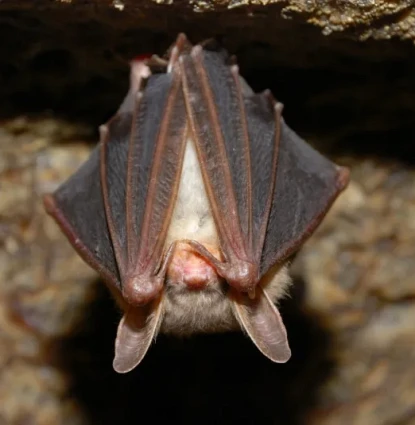
Bat Removal in Central Florida
Bat removal in Central Florida means exclusion: the colony is let out through one-way devices and the building is sealed behind it, only inside the window state rules allow. Check today’s date against that window with our bat season checker.
Every bat native to Florida is a protected nongame species, and that one fact governs the whole job. The Florida Fish and Wildlife Conservation Commission sets a maternity season from April 16 through August 14, and under Florida Administrative Code 68A-9.010 it is illegal to exclude a colony inside that window: the pups cannot fly yet, so sealing the building shuts them in to die while the adults are out feeding. Legal exclusion runs August 15 through April 15. FWC governs the method as well as the calendar. An exclusion device has to stay up for a minimum of four nights, and the work must be done when overnight temperatures are forecast to reach at least 50°F, so the colony can actually get out. Trapping or killing bats is prohibited in every month of the year. What the colony leaves behind is a separate problem: guano can host Histoplasma capsulatum, and the CDC identifies the resulting lung infection as a serious risk for immunocompromised people, which is why disturbed deposits come out under HEPA-filtered respirators instead of a broom. A company offering to spray, trap, or exclude your bats in June is offering something Florida does not permit.
That strong, unpleasant odor you're noticing is likely guano, another term for bat droppings, and a clear sign of a bat infestation. Bats are adept at squeezing into tight spaces, using these areas for daytime shelter before venturing out at night. Guano is often visible near their entry points on your home or building, and you may also detect the odor from a distance or observe bats exiting the structure at dusk. Bats form large colonies, compounding the problem.
Identifying bat entry points can be challenging, as they can fit through openings as small as ½ inch. Common bat habitats include attics, sheds, barns, chimneys, soffits, and various other building crevices. Bat guano poses a significant health hazard and can lead to costly damage if not addressed. Dr. Critter specializes in comprehensive bat removal services, including inspections, humane eviction, guano cleanup, entry point repair, and deodorization. If you suspect a bat problem, don't delay. Contact us for expert bat removal and guano cleanup services.
How do bats get into a Florida attic?
Through gaps you would not think twice about. A bat needs roughly three-eighths of an inch: a lifted roof tile, an unsealed ridge vent, the gap where fascia board meets the roof deck, or a construction joint at a gable end. They do not chew or claw their way in, so there is no torn-open entry to find. You find bats by watching the building at dusk rather than by hunting for damage.
What are the signs of a bat colony overhead?
Three give it away. Dark greasy staining around an entry gap, left by fur passing the same spot night after night. Guano accumulating below that gap or in the attic beneath the roost, crumbling to a glittery powder of insect wings. And a chittering, high squeaking that builds in the half hour before the colony emerges at dusk.
| Period | Colony status | Can exclusion be done? |
|---|---|---|
| Aug 15–Apr 15 | No dependent young; colony free-flying | Yes, this is the legal exclusion window |
| Apr 16–Aug 14 | Maternity season; flightless pups in the roost | No, prohibited under FAC 68A-9.010 |
| Late Aug–Oct | Young flying; colony at maximum size | Yes, and the best time to act |
| Nov–Feb | Reduced activity in cool spells; colony still resident | Yes, though emergence counts take longer |
Why can bats not be removed between April and August?
Florida Administrative Code 68A-9.010 prohibits bat exclusion from April 16 through August 14. During those months the roost holds flightless pups, and sealing the building shuts them in to die while the adults fly out. Every Florida bat species is protected, and killing them is illegal. If a company offers to exclude your bats in June, that is a rule violation and a reason to call someone else. The full picture, including what the statute covers beyond the calendar, is in our guide to Florida's bat removal laws and the maternity-season blackout. April 15 is the last day a building can be cleared and August 15 the first day work can resume, both mapped out in our wildlife activity calendar.
How does bat exclusion work?
The colony is never trapped or handled. Every gap on the structure is sealed except the ones the bats use, and those get one-way devices that let a bat out and give it nowhere to re-enter. The colony empties itself over several nights. Once emergence counts confirm the roost is clear, the devices come off and the last openings are closed permanently. FWC sets the conditions in its Bats in Buildings guidance: the devices stay up for at least four nights, and the work is timed for nights forecast at 50°F or warmer so the colony actually flies. Not sure whether today is inside the legal window? Our bat season checker answers that for any date.
How long does bat exclusion take?
Two to four weeks in most cases. Sealing and device installation take one to two days. The colony then needs five to ten nights to clear, longer in cool weather when bats fly less. Final sealing happens after that, and guano remediation and insulation replacement are scheduled once the roost is confirmed empty.
Which bats live in Central Florida?
Florida has 13 native bat species, and FWC names the Brazilian free-tailed bat as the one commonly found in Florida buildings. That matches what we pull out of attics here. The evening bat is the next most common, and the southeastern myotis turns up now and then in attics and barns. Our guide to identifying bats in Central Florida homes shows how to tell them apart from the guano, the entry gap and the way the colony leaves at dusk. One species changes everything: UF/IFAS notes that the Florida bonneted bat, which lives in south and central Florida, “cannot be excluded or removed at any time of the year,” so the species gets settled before any work is booked.
What do bats in an attic do to a house?
Most of the harm comes from what the colony leaves behind. Guano piles up under the roost and works down into the insulation, the urine brings an ammonia smell, and oil from their fur stains the wood or tile around the gap they use every night. Where the deposits are heavy, the insulation under the roost comes out and gets replaced rather than cleaned in place. Then there is the fungus. The CDC says Histoplasma spreads in bird and bat droppings and that people get histoplasmosis by breathing in its spores; in someone with a weakened immune system it can turn into a long-term lung infection. FWC adds that Florida has no reported histoplasmosis cases from bats in buildings, and still points to the CDC advice to wear a respirator in a confined space with guano. We follow that advice on every bat attic.
Does bat guano cleanup come after exclusion?
Yes, always after. Cleaning an attic the colony is still using just gives the bats fresh insulation to soil. Once emergence counts show the roost is empty and the last openings are sealed, the guano comes out under HEPA-filtered respirators, the contaminated insulation is removed and replaced, and the area is sanitized. That is the same attic restoration work we do after any animal, and it is quoted together with the exclusion so it does not arrive later as a surprise. For anyone tempted to do it themselves, the UF/IFAS bat publication says to wear an N95 respirator, dampen the dust first, and call a professional for large accumulations.
Do bat repellents, mothballs or ultrasonic devices work?
No. The UF/IFAS Extension publication Has Your House Gone Batty? puts it bluntly: “Mothballs, bat baits, motion sensor lights, and bat repellents are ineffective,” and ultrasonic devices “do not repel bats and can lead to deafness in other pets.” Some of these are also against the rules. FWC says attempts to harm or harass bats with lights, sounds or toxic substances are not allowed, its bat rule bars pesticides or poisons used to harm, kill or deter bats, and capturing and relocating bats is prohibited as well. Exclusion is the one method that works, and it is the one Florida allows.
Does homeowners insurance cover bat removal?
Usually not for the removal itself. Standard policies commonly exclude loss caused by animals, vermin and infestation, and getting bats out of a house tends to be treated as maintenance. Damage is a separate question that turns on your policy wording and on how the damage happened. Our article on whether homeowners insurance covers bat removal in Florida goes through real policy language and what to photograph, and the wider guide to homeowners insurance and wildlife damage in Florida covers the other animals. On our side, the phone estimate and the inspection are free, the quote comes after the inspection rather than off a price list, and the scope is written out line by line so it can go to an adjuster. Our wildlife removal cost guide shows how each stage of a bat job is priced.
How do I prevent bats coming back?
Seal the building. Deterrents do nothing, as the section above explains. During the exclusion every gap except the active ones is closed first, and once the colony is out, the one-way devices come off and those last openings are sealed for good. Timing that last step matters: FWC warns that netting taken down without sealing the openings lets the bats move back in the following night. Because a bat needs only about three-eighths of an inch, the inspection covers lifted tiles, ridge vents, fascia joints and gable ends, not just the gap you watched them use. Sealed entry points carry our lifetime warranty, so if one fails we come back at no charge.
Most of that work lands in one place. Orlando has the old barrel-tile roofs and gable louvers Brazilian free-tailed bats favor, so bat exclusion in Orlando is the busiest version of this job we run, and that page covers the local timing around the August 15 reopening.
Dr. Critter has worked as a nuisance wildlife control operator in Central Florida since 1996 and is listed with the Florida Fish and Wildlife Conservation Commission operator directory. Worth knowing, because most of this industry says otherwise: the FWC does not issue a trapper license, and no state license is required to remove nuisance wildlife from your home. What actually governs the work is rule, not paperwork. FWC rule 68A-9.010 decides what happens to an animal once it is caught alive: release on the property where it was trapped, release somewhere else only when that land is in the same county, is 40 contiguous acres or more, and its owner has put the permission in writing, or humane euthanasia. Dropping it off anywhere short of that is not on the list, whatever the operator tells you, and that rule binds every operator in Florida whether or not they are on any directory.
Bat Exclusion Service Areas
Dr. Critter handles bat exclusion across Central Florida. If bats are showing up at your property, pick your city for local response details:
For a full overview of how we handle bats, see our main humane wildlife removal service page, or browse every Dr. Critter service area.
Related Wildlife Services
Depending on what the bats situation involves, one of these specialized services may apply:
- Humane critter removal — trapping and relocation of live animals.
- Animal & wildlife proofing — structural exclusion to prevent re-entry.
- Attic restoration — insulation removal, sanitization, and reinsulation after wildlife contamination.
- Dead animal removal — locating and removing carcasses with odor and pathogen remediation.
- Critter waste cleaning — HEPA-vacuum and enzyme treatment of contaminated areas.
- Emergency wildlife removal — same-day response for aggressive, venomous, or trapped wildlife.
- Rodent removal — rat, mouse, and squirrel exclusion programs.
- Snake control — the Snake Shield program for snake-prone properties.