Click Here to get a Dead Animal Removal Phone Estimate
Dead Animal Removal Experts
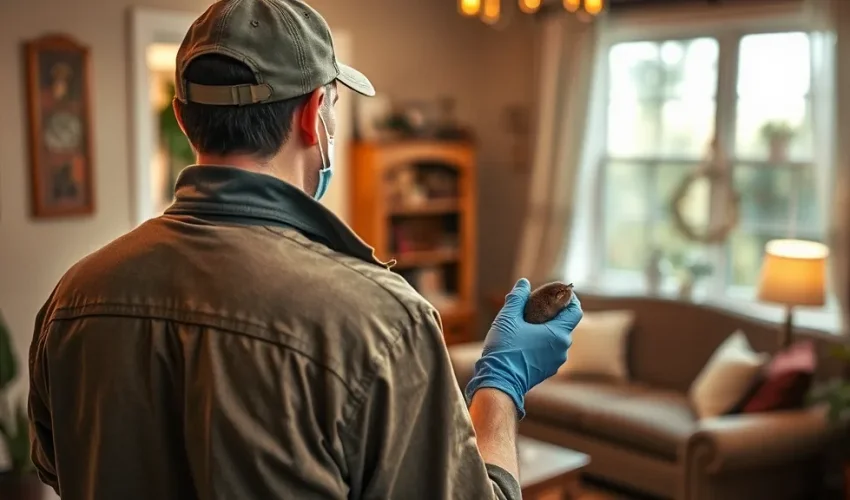
Has a dead animal left a foul odor and health hazard in your home or business? Dr. Critter offers expert dead animal removal and disinfection services to restore your property. Our team is equipped to handle every species commonly found deceased in Central Florida structures — rats, opossums, raccoons, squirrels, and the occasional snake or bat. If the animal is still alive rather than deceased, start with removing live animals from your attic.
Dead animals pose serious health risks due to parasites, bacteria, and the release of decomposition gases that can sicken the people sharing the building.
Why dead animal removal in a Florida attic is a health-and-safety job, not a smell problem: A deceased animal in an enclosed space begins releasing detectable odor within 24 to 72 hours in Florida heat, peaks at 1 to 3 weeks, and continues at lower intensity for up to 4 weeks until soft tissue is fully reduced. During that period the carcass attracts secondary pests — blow flies, dermestid beetles, and scavenger rodents — and the decomposition fluids carry Leptospira bacteria (leptospirosis), Salmonella, and the same pathogens the animal carried in life. Dr. Critter's removal protocol locates the source with thermal imaging and HVAC-vent inspection, extracts the remains under HEPA-respirator PPE, treats the affected surface with EPA-registered antimicrobials, and replaces any contaminated insulation. Skipping the sanitization step is the most common reason an odor returns even after the carcass is removed. If you are trying to work out whether what you are smelling is a dead animal at all, and how long it is likely to go on, we set out what causes the smell and how long it lasts in more detail.
How do you find a dead animal in a wall or attic?
To find a dead animal, follow the odor room by room, closing doors behind you until you reach the spot where the smell peaks. At that point look for blow flies gathering at a vent, outlet, or recessed light, a brown or yellow stain spreading on the ceiling, or a warm spot a thermal camera can locate behind drywall. If the smell gets stronger when the AC runs, the carcass is in or near the ductwork. A few techniques that work:
- Follow the strength of the smell. Move room to room with a closed door behind you; the room where the smell is strongest is closest to the source.
- Check the AC return path. Dead animals in attics often end up near or above HVAC enclosures because the warmth attracts rodents to die in those areas. If the smell intensifies when the AC runs, the carcass is in or near the supply or return ducting.
- Look for blow-fly activity. Small black flies congregating at a wall outlet, vent, or recessed light is a strong indicator the carcass is in that wall void.
- Watch the ceiling. A growing brown or yellow stain on drywall is decomposition fluid. The carcass is directly above it.
- Use thermal imaging. A trained technician with a thermal imager can pinpoint a decomposing carcass behind drywall or insulation in minutes.
If you cannot locate the source within a day, call us — the longer the carcass remains, the worse the secondary contamination and the more attic restoration the job will need.
What animals commonly die in Florida attics?
Rats are by far the most common animal found dead in a Central Florida attic, usually after eating rodenticide, followed by opossums, squirrels, and juvenile raccoons. Rats and squirrels decompose in about one to two weeks, while larger opossums and raccoons can take three to four weeks. A dead raccoon kit almost always means an active litter is still somewhere in the structure.
Most rats found dead in a Central Florida attic died after eating anticoagulant bait. According to the Merck Veterinary Manual, these baits don't kill on contact. A rodent that has fed usually dies four days to two weeks later, most often six to nine days after its first dose. That lag is why a rat so often ends up dead deep inside a wall or soffit, well away from the bait station.
- Rats and roof rats: The most common dead-animal call. Rats die quickly from rodenticide or starvation if water access is sealed; the smell is sharp and lasts roughly 7–14 days.
- Opossums: Larger body mass means longer decomposition (3–4 weeks). Opossums often die after entering a roost they cannot easily exit.
- Raccoons: Adults rarely die in attics; juveniles separated from a mother do. A dead raccoon kit usually means an active raccoon entry point — the rest of the litter is somewhere else in the structure.
- Squirrels: Squirrel deaths in attics are common after rodenticide is applied near the structure. The body is small but the smell is disproportionately strong because squirrels often die in confined cavities.
- Snakes and bats: Less common but possible. A dead bat indoors is also a potential rabies exposure if anyone may have had contact — preserve the body and call us.
If the deceased animal was in or near insulation for more than a few days, the contamination usually requires attic restoration and not just carcass removal. We will tell you up front whether the smell will dissipate after the removal alone, or whether substrate treatment is needed.
A dead animal is more than an odor problem. The CDC links rodents to over 35 human diseases, and a dead rat or mouse can keep carrying pathogens like leptospirosis and hantavirus for days after it dies. The CDC also warns against sweeping or vacuuming dry droppings near the body, since that can push infectious particles into the air. That's why we wet-clean and disinfect the site rather than dry-sweep it.
Dead rat or mouse in the wall, attic or crawlspace
A dead rodent removal call is the most common version of this job, and it is usually a roof rat that ate bait somewhere else and died inside the building. The body is small, so the smell is what you have to work from. We map it room by room and closet by closet, then narrow it with a thermal camera and by checking the routes rats actually use: the top plates of interior walls, the soffit line, the gap around a plumbing stack, and the crawlspace under a bathroom. Blow flies gathering at one outlet or recessed light usually settle it.
Removal means opening the wall or ceiling at the right spot, taking out the carcass and any soaked insulation, and wet-cleaning and disinfecting the cavity before it is closed. An enzyme treatment breaks down what is left of the odor rather than covering it. Then comes the part a dead rat removal on its own skips: finding how the rodent got in and sealing it, because a bait-and-forget approach leaves the same gap open for the next one, and the next one dies in the same wall.
How fast can you come? Same day in most of Central Florida. A carcass in a wall gets worse by the hour in Florida heat, so the line is answered seven days a week and a dead-animal call is scheduled ahead of routine work.
Our comprehensive animal removal services include:
Every dead-animal call is handled as one job rather than a series of separate visits — locating the carcass, removing it, treating the site, and repairing whatever let the animal in. The same crews run our animal control service across Oviedo and the rest of the Seminole and Orange County corridor, so a removal and the follow-up exclusion work are usually booked together. We work south into Polk County too, where animal control in Haines City handles the same removal and repair work.

Cite this page
Plain text
Dr. Critter Wildlife Control. "Dead Animal Removal in Central Florida." Last updated September 22, 2026. https://drcritter.com/services/dead-animal-removal/
Link
Methodology and reuse
Everything on this page comes from work Dr. Critter has carried out in Central Florida since 1996, not from a survey or a third-party dataset. The method descriptions, the odor timelines and the case detail are what the crews actually do and observe on the job.
Where Florida law is described, the source is the Florida Fish and Wildlife Conservation Commission and the Florida Administrative Code rather than our own practice. Those rules change, so check the state text before relying on a date or a threshold in your own writing.
No figure on this page is an industry average or a national estimate. If you need a number that applies outside Central Florida, this is not the page to take it from.
Last updated September 22, 2026. You may republish these figures with attribution and a link to https://drcritter.com/services/dead-animal-removal/.