Click here for a free estimate to remove Raccoons!
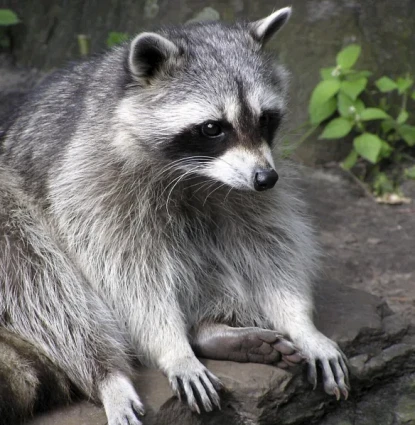
Raccoon Removal in Central Florida
Raccoon removal in Central Florida covers getting the animal and any young out of the attic, sealing the roofline it broke through, and cleaning up the droppings it left. This page explains each step and the state rules that apply.
Raccoons are the leading rabies vector species in Florida, according to the Florida Department of Health — responsible for over half of confirmed animal rabies cases in most years. They also carry Baylisascaris procyonis, the raccoon roundworm, whose eggs survive in attic insulation for years and cause severe neurological disease in humans. Raccoons in attics during May through August are almost always nursing mothers; humane exclusion requires locating the kits before sealing entries, otherwise the mother will tear through siding to reach them. Standard Dr. Critter raccoon removal includes a thermal inspection for kits, hand-removal of the litter if present, one-way door installation for the adult, and post-removal sanitization of contaminated insulation under HEPA respirator PPE.
Raccoons are a frequent problem for Florida homeowners, and it's common for them to establish large families within attics. They often create visible entry points and cause significant insulation damage. Raccoons are found in attics, chimneys, and crawlspaces, using vents, soffits, and damaged fascia boards as access points. Common complaints include damaged sod, overturned trash cans, and droppings on pool decks.
Dr. Critter's wildlife technicians are experts in raccoon removal, control, proofing, and damage restoration. We provide comprehensive solutions, including inspections, humane trapping and removal, exclusion of entry points, removal of fecal matter and damaged insulation, and cleanup of biological attractants. Note: Raccoon removal services are often covered by homeowners insurance. Contact Dr. Critter today to schedule an inspection and quote.
What does a raccoon actually do to a Central Florida attic?
A raccoon does structural damage, not nuisance damage. It gets in by tearing back soffit panels, pushing through a gable vent, or working open the seam where a roof meets a dormer. Openings four inches across are enough. Once inside it flattens insulation into a nesting bed, pulls ductwork loose, and chews wire sheathing. The droppings are tubular, blunt-ended, and deposited in one repeated spot rather than scattered.
How do raccoons get into a Florida attic?
Through the roofline, and usually by force. The entries we find are the ones described above: a soffit panel torn back at a corner, a gable or roof vent pushed in, the seam where a roof meets a dormer or a second-story wall. Raccoons climb well, so a limb hanging over the roof or anything stacked against a wall gives them a way up. A squirrel or a rat chews a neat hole. A raccoon pries and tears, which means you can often spot the damage from the yard if you walk the house and look along the eaves for a bent soffit, a loose vent cover or a lifted roof edge.
How does raccoon removal work?
It starts with an inspection that finds every entry point and, from spring into early summer, checks for a litter before anything gets set. With no young in the attic, a one-way door goes over the active hole: the raccoon pushes out on its next trip and cannot get back in. Where a trap suits the job better, it is a live trap, and what happens to the animal after that is set by state law, covered below. If there are kits, they come out by hand and go back to the mother outside the house, which stops her tearing a second hole to reach them. Once the attic is confirmed empty the openings are sealed, and the droppings and contaminated insulation come out after the structure is closed. Our humane wildlife removal page walks through the same sequence for every species.
What does a raccoon in the attic sound like?
Heavy and slow. Where a squirrel patters, a raccoon thumps, and you hear it walking rather than running, usually directly overhead and usually after dark. Females with young add a distinctive chittering and a churring call that carries through the ceiling. If you are hearing weight shifting above you between dusk and dawn, raccoon is the first thing to rule out.
When are raccoons worst in Central Florida?
Breeding runs January through March, so the attic calls cluster from March into June when females move litters indoors. That timing changes the job: a female with kits cannot simply be excluded, because sealing the entry traps the young inside and the mother will tear open a second hole trying to reach them. The kits have to be located and removed by hand first. Our Central Florida wildlife activity calendar sets out which species dominate which months, and the legal windows that go with them.
| Season | What the animal is doing | Typical attic sign |
|---|---|---|
| Jan–Mar | Breeding; females scouting den sites | New soffit or vent damage, no young yet |
| Mar–Jun | Litters born and raised in the den | Chittering overhead, heavy daytime movement, ceiling staining |
| Jul–Sep | Young mobile and following the female out | Multiple animals using one entry, widened opening |
| Oct–Dec | Dispersal; adults seeking warm, dry dens | Reopened entry points from earlier in the year |
What does Florida law say about trapping and relocating raccoons?
Relocation is out, to start with. The Florida Department of Health names raccoons and bats as the main wildlife sources of rabies in Florida, and the Department prohibits relocating raccoons. Under FWC rule 68A-9.010, as set out in FWC’s nuisance wildlife FAQ, a live-captured nuisance raccoon must be released on the property where it was caught, released off site only where the receiving land is in the same county, runs to at least 40 contiguous acres and its owner has given written permission, or euthanized humanely, and within 24 hours either way. A county rabies alert or quarantine overrides even that, because the rule does not let transport cut across one. Any company offering to drive your raccoon to the country is describing something Florida does not permit.
Why raccoon droppings change the cleanup scope
Raccoon feces can carry Baylisascaris procyonis, a roundworm that is the reason a contaminated attic is a health job and not a tidying job. The eggs are not infective at the moment they are passed. The Companion Animal Parasite Council puts it at a minimum of 10 to 14 days in the environment before they larvate and reach the infective stage. After that the eggs are, in CAPC’s words, “hardy and can survive and remain infective for years,” and common disinfectants do not kill them. So spraying the attic accomplishes very little. Removing the contaminated insulation is what removes the eggs, and that is why a raccoon job left to run for a season turns into an insulation replacement instead of a wipe-down. For the full picture of the health risks of raccoon droppings, including how exposure actually happens and who is most at risk, read the dedicated post.
How long does raccoon removal take?
Most jobs run one to three weeks end to end. The inspection and trap set happen on day one. Removal usually resolves within three to ten days depending on how many animals are using the attic and whether young are present. Entry-point sealing follows removal, and any insulation and sanitation work is scheduled after the structure is closed.
Does insurance cover raccoon damage?
Sometimes, and it depends on how the damage happened. Many standard policies treat a sudden break-in, like a raccoon tearing through a fascia board in a single night, differently from damage that built up over weeks while animals lived in the attic, which tends to land under the exclusions for animals, vermin and gradual wear. Your own policy wording decides it. Our guide to what Florida homeowners insurance covers for wildlife damage goes through the usual exclusions and the documentation that helps a claim. We photograph the damage and write the scope out line by line, so it can go straight to an adjuster.
How much does raccoon removal cost?
We do not publish a price list, because the number depends on the house: how many entry points there are, whether there are young, and how much insulation has to come out. The phone estimate and the on-site inspection are both free, and the quote follows the inspection. Removal usually takes three to ten days, sealing follows once the attic is confirmed empty, and sealed entry points carry a lifetime warranty. Our guide to how wildlife removal is priced in Central Florida breaks it down stage by stage.
How do you keep raccoons out after removal?
Close the building and take away the reason to come back. The torn soffit, the vent and the roof seam get repaired with material a raccoon cannot pull apart, and limbs over the roof get cut back. Around the yard, the Department of Health’s rabies advice is not to feed wildlife, not to leave food out that draws animals in, and to feed pets indoors. Garbage cans with lids that lock shut do the rest. If a raccoon does find a weak spot at one of our sealed entries, the warranty covers the return visit.
For what the damage looks like once it has been running a while, see a real Winter Park raccoon attic damage case: photographs, the entry point, and the full remediation scope from one job.
Dr. Critter has worked as a nuisance wildlife control operator in Central Florida since 1996 and is listed with the Florida Fish and Wildlife Conservation Commission operator directory. Worth knowing, because most of this industry says otherwise: the FWC does not issue a trapper license, and no state license is required to remove nuisance wildlife from your home. What actually governs the work is rule, not paperwork. FWC rule 68A-9.010 decides what happens to an animal once it is caught alive: release on the property where it was trapped, release somewhere else only when that land is in the same county, is 40 contiguous acres or more, and its owner has put the permission in writing, or humane euthanasia. Dropping it off anywhere short of that is not on the list, whatever the operator tells you, and that rule binds every operator in Florida whether or not they are on any directory.
Raccoon Removal Service Areas
Dr. Critter handles raccoon removal across Central Florida. If raccoons are showing up at your property, pick your city for local response details:
- Raccoon Removal in Altamonte Springs, FL
- Raccoon Removal in Brevard County, FL
- Raccoon Removal in The Villages, FL
- Raccoon Removal in Windermere, FL
For a full overview of how we handle raccoons, see our main humane wildlife removal service page, or browse every Dr. Critter service area.
Related Wildlife Services
Depending on what the raccoons situation involves, one of these specialized services may apply:
- Humane critter removal — trapping and relocation of live animals.
- Animal & wildlife proofing — structural exclusion to prevent re-entry.
- Attic restoration — insulation removal, sanitization, and reinsulation after wildlife contamination.
- Dead animal removal — locating and removing carcasses with odor and pathogen remediation.
- Critter waste cleaning — HEPA-vacuum and enzyme treatment of contaminated areas.
- Emergency wildlife removal — same-day response for aggressive, venomous, or trapped wildlife.
- Rodent removal — rat, mouse, and squirrel exclusion programs.
- Snake control — the Snake Shield program for snake-prone properties.