October 20, 2026
Is Raccoon Poop Dangerous? Health Risks in Florida Attics
You opened the attic hatch to look for a leak, the holiday decorations, or that scratching sound you've been hearing. Instead you found a pile of dark, lumpy droppings stacked in one corner — and the smell hit you. Before you grab a trash bag, stop. What you're looking at is one of the most hazardous things a homeowner can encounter in their own house, and the wrong cleanup approach can put you in a hospital months from now.
This guide walks through exactly why raccoon feces is dangerous in a Florida attic, what professional cleanup actually looks like, and the specific calls to make when you find a latrine in your home.
| Pathogen | How it transmits | Most at risk | What cleanup requires |
|---|---|---|---|
| Baylisascaris procyonis (raccoon roundworm) | Ingesting eggs from contaminated insulation, dust, or hands | Young children and anyone who puts hands to face after contact | Physical removal of contaminated insulation, because disinfectant does not kill the eggs |
| Leptospira (leptospirosis) | Raccoon urine reaching broken skin, eyes, nose, or mouth | Anyone handling wet contaminated material without PPE | Removal of urine-soaked material, then disinfection of the deck below |
| Salmonella and E. coli | Fecal contact transferred to hands, then to food | Households sharing an attic air path with living space | Enzyme treatment and HEPA vacuuming of the affected bays |
| Airborne spores and dust | Disturbed dry droppings drawn through vents and AC returns | Anyone in the house while the attic is being disturbed | Negative-pressure containment and a sealed HEPA vacuum rather than a shop vac |
Baylisascaris Procyonis: The Raccoon Roundworm Threat
Baylisascaris procyonis is a parasitic roundworm that lives in raccoon intestines. An infected raccoon — and a CDC journal review puts infection rates as high as 70% in adult raccoons — sheds millions of microscopic eggs in its feces every day. The eggs are not infectious immediately after being shed; they need about two to four weeks in the environment to develop. Once they do, they remain viable for years, surviving Florida heat, freezing, drying, and most household disinfectants.
Humans become infected by ingesting eggs. That sounds unlikely until you list the realistic pathways:
- Touching contaminated insulation, then touching food, your face, or a child.
- Stirred-up dust that settles on hands, food or counters and is later swallowed, when an attic vent runs, when AC ducting moves contaminated air, or when someone sweeps or vacuums a latrine without a HEPA filter.
- Pets tracking eggs indoors on their paws after entering a yard or shed where a raccoon has defecated.
- Children handling soil or items from an outdoor latrine site — woodpile, deck corner, sandbox — and putting hands in mouth.
Once ingested, the larvae hatch in the small intestine and migrate through body tissue. In raccoons, the lifecycle continues normally. In humans, the larvae get lost — they travel through the liver, lungs, eyes, and most catastrophically the brain and spinal cord, causing neural larva migrans. The CDC notes that cases in people are not frequently reported, but case-fatality and severe-disability rates among diagnosed cases are extremely high. There is no consistently effective cure once neurological symptoms appear — most treatment protocols focus on slowing progression with anti-helminthic drugs and steroids.
The low official case count is the dangerous part. Mild exposures may go undiagnosed because doctors rarely test for it, and the symptoms (fatigue, vision problems, coordination issues) overlap with many other neurological conditions. The conservative public-health stance is: treat any raccoon latrine as a serious biohazard regardless of how few cases have been documented.
Leptospirosis from Raccoon Urine
Where there are raccoon droppings, there is also raccoon urine, and the urine carries its own pathogen risk. Leptospira bacteria are shed in urine and survive in damp materials for weeks to months — longer in Florida's humidity than in drier climates. Exposure happens through:
- Contact between contaminated water or soil and broken skin (a cut, scrape, or insect bite).
- Splashing into the eyes, nose, or mouth during cleanup.
- Pet exposure — dogs can contract leptospirosis from sniffing or licking contaminated soil, and the disease is serious in dogs.
Human leptospirosis can run from a mild flu-like illness to severe Weil's disease with liver failure and meningitis. It is treatable with antibiotics if caught early. The Florida Department of Health tracks leptospirosis as a reportable disease and notes that wildlife exposure is a recognized risk factor.
Why a Raccoon Latrine Is Harder to Clean Than It Looks
The instinct is to grab gloves, a trash bag, and bleach. That approach misses several things:
- Common disinfectants do not kill Baylisascaris eggs. The eggs have a thick, sticky outer shell engineered to survive in the environment. Bleach, quaternary ammonium cleaners, hydrogen peroxide, and standard veterinary disinfectants do not reliably destroy them. Heat above 62°C (144°F) for a sustained period works, but you cannot apply that to insulation in place.
- Sweeping or vacuuming releases the eggs into the air. A standard shop vac will recirculate microscopic particles right out the exhaust. Without HEPA filtration on a properly sealed unit, you turn a localized contamination into an airborne one.
- The latrine is rarely the whole problem. Raccoons defecate in the same spot repeatedly, but they walk, urinate, and shed across the entire attic. Cleanup that addresses only the visible pile leaves contaminated insulation everywhere the raccoon traveled.
- Inadequate PPE leaves you exposed. CDC's floor for a confined space like an attic is an N95 respirator, not a basic dust mask. Our crews go further, with a P100-rated respirator, eye protection, disposable Tyvek-style coveralls, sleeved gloves, and footwear that stays in the contaminated zone. Most homeowners don't own any of that.
- Disposal takes care. CDC advises that feces and contaminated material be removed and burned, buried, or sent to a landfill. In an attic that means bagging soiled insulation without spreading its dust through the house on the way out.
This is the rare cleanup that genuinely is dangerous enough to outsource — not because of difficulty, but because the consequences of doing it half-right include a parasite that survives years and a disease there's no cure for.
What Professional Raccoon Attic Cleanup Looks Like
Done properly, professional critter waste and droppings cleanup is a structured remediation, not just "scoop and spray." The Dr. Critter process for a contaminated attic runs roughly:
- Inspect and map. Walk the attic in PPE to identify the latrine, satellite defecation spots, urine staining, nesting material, and the structural entry points the raccoons used. Document the contamination footprint with photos.
- Contain. Seal the access hatch and any HVAC return openings with plastic sheeting and tape so the cleanup doesn't push particles into the living space below.
- Remove solid waste and contaminated insulation. Bag the visible feces first, then remove insulation from the latrine area plus a generous radius around it — usually the entire bay or section, not just the obvious pile. Insulation is the absorbent matrix that holds eggs, urine, and nesting bacteria; trying to salvage it is the most common shortcut and the most common reason recontamination shows up six months later.
- HEPA vacuum. Vacuum down to the framing and decking with a sealed HEPA unit to capture loose particulate that became airborne during removal.
- Enzyme treatment. Apply an enzyme-based biological cleaner to the framing, decking, and remaining substrate. Enzymes break down the organic matter the eggs adhere to, which is the practical mechanism for getting them off porous surfaces.
- Replace insulation. Install new insulation (typically blown-in cellulose or fiberglass batt depending on the structure) to bring the attic back to its target R-value.
- Seal entry points. The cleanup is wasted if the raccoons return. Seal every gap larger than a half-inch with stainless steel mesh and structural fasteners, repair chewed soffit and fascia, install chimney caps, and screen attic vents.
- Document and warranty. Photo documentation of every entry point sealed, plus a written warranty on the exclusion work.
A full cleanup like this typically takes one to two days for a single-family home depending on attic size. Dr. Critter's attic restoration program bundles all of these steps into a single quoted job.
How Much Insulation Do You Need to Remove?
The honest answer: more than you'd guess looking at the visible mess. The contamination radius around a raccoon latrine depends on:
- How long the raccoons were active — a colony there for six weeks contaminates a much smaller footprint than a family that's been using the attic for two years.
- Whether HVAC ducting runs through the attic — air handling pushes contaminated particulate well beyond the latrine itself.
- Whether there's been water intrusion — roof leaks or condensation that wet the insulation spread the contamination further and degrade the substrate.
- Whether the latrine is the only one — raccoons often establish multiple defecation sites; some are obvious, some are tucked behind HVAC or in eave corners.
Frequently Asked Questions
Can I clean raccoon droppings myself if I wear a mask?
A standard dust mask or surgical mask does not stop Baylisascaris eggs. CDC's cleanup guidance calls for an N95 respirator in confined spaces, with disposable gloves and rubber boots. We use a P100-rated full-face or half-face respirator, plus Tyvek coveralls, eye protection, and sleeved gloves. Without that combination, you are exposing yourself to a parasite for which there is no reliable cure once neurological symptoms develop. CDC does publish do-it-yourself steps for homeowners and suggests calling animal control for extra help. A cramped attic latrine is where most people take that second option.
How do I know if my attic has raccoon feces?
Raccoon droppings are 2 to 3 inches long, blunt-ended, tubular, and often piled in the same location repeatedly (raccoons are latrine-defecating animals). They commonly contain visible berry seeds, corn kernels, or other recognizable food remnants. The smell is sharp and ammoniac due to associated urine. If you've found anything matching that description, do not disturb it.
Is one raccoon enough to contaminate an attic?
Yes. Infection is common in raccoons, and a single infected animal can shed millions of Baylisascaris eggs a day. One animal using one latrine for a single season is sufficient to contaminate the surrounding insulation to a degree that requires professional remediation.
How long does the contamination remain dangerous?
Baylisascaris eggs survive in the environment for years. They resist freezing, drying, and most disinfectants. This is why "letting it dry out" or "leaving the attic for a year" is not an effective approach — the contamination is more dangerous after eggs have had time to mature, not less.
Do I need to do anything about my HVAC system?
If raccoons were active in the attic and your HVAC ducting runs through that space, the ducting should be inspected. Visible contamination, urine staining, or torn insulation around the ducts means the duct interior may also carry pathogens. Have the ducts professionally inspected — and in serious cases, cleaned or replaced — before reusing the system. And if the raccoons are still coming and going, no cleanup will hold until you have the animals professionally removed from your attic and the entry points sealed.
The droppings are the cleanup half of the job. For the removal half, from the check for kits to the one-way door and what Florida law allows after the catch, see our page on raccoon removal in Central Florida.
Found raccoon droppings in your attic?
Don't touch it. Dr. Critter offers free inspections across Central Florida — we'll tell you exactly what cleanup is needed and what it costs before you commit to anything. Same-day inspections available in most areas.
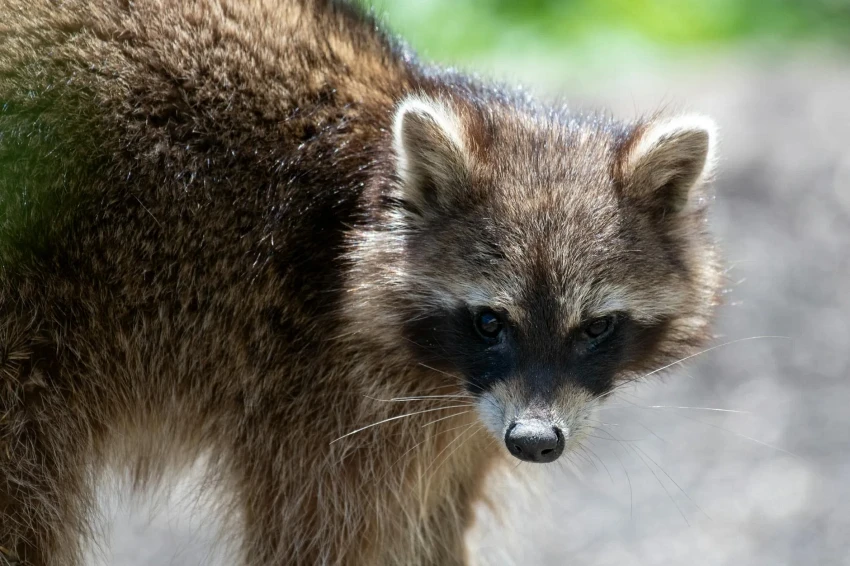
Photo by Andrew Patrick Photo on Pexels
Cite this page
Plain text
Dr. Critter Wildlife Control. "Is Raccoon Poop Dangerous? Health Risks in Florida Attics." Published May 26, 2026. https://drcritter.com/blog/is-raccoon-poop-dangerous-health-risks-in-florida-attics/
Link
Methodology and reuse
The parasite biology and the raccoon roundworm infection rates on this page are drawn from the CDC's Baylisascaris pages, linked in the section that carries them (#raccoon-roundworm-infection-rate and #southeast-raccoon-infection-rate). The leptospirosis section cites the Florida Department of Health. No source beyond those two is used for a health claim.
The insulation figure (#insulation-replacement-share) is not a published statistic. It is the working rule Dr. Critter applies on a single-story Central Florida home with one moderately used latrine, and a long-term colony or HVAC contamination moves it to full replacement. Quote it as a contractor's rule of thumb, not as research.
Published May 26, 2026. You may republish these figures with attribution and a link to https://drcritter.com/blog/is-raccoon-poop-dangerous-health-risks-in-florida-attics/.
Florida Nuisance Wildlife Laws by…


Does Homeowners Insurance Cover…
October 13, 2026
Armadillo Holes in Your Florida…
October 6, 2026


Who to Call for Wildlife in…
September 22, 2026
Florida Rabies Cases by County and…
September 15, 2026


Wildlife Removal Cost in Central…
September 15, 2026
Florida Nuisance Wildlife Trapping…
August 18, 2026


Wildlife Removal vs Pest Control:…
August 11, 2026
Central Florida Wildlife Activity…
August 11, 2026


Rats in Your Attic Could Be More…
August 5, 2026