October 20, 2026
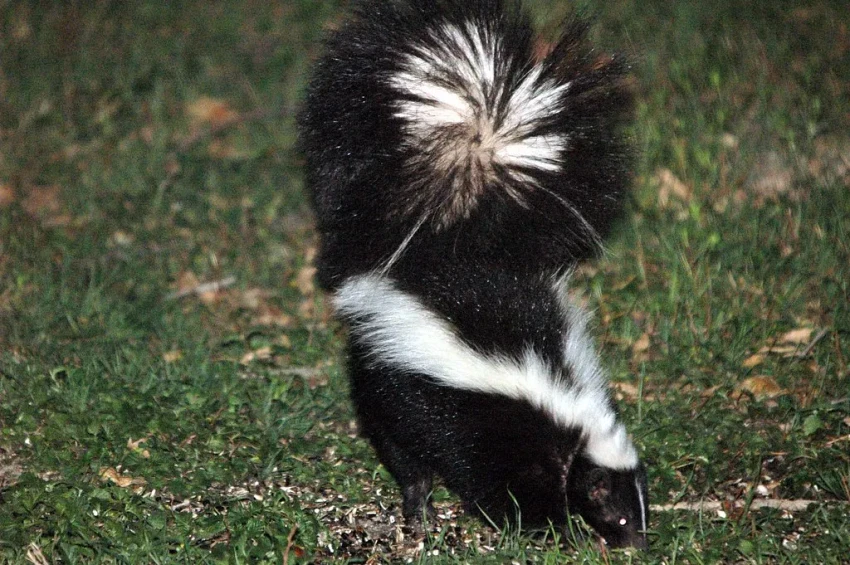
Skunk Removal in Central Florida — Smell, Den Sites, and Humane Eviction
If a sharp, lingering musk has settled around your deck or shed, or you have noticed fresh holes opening up along the foundation, there is a good chance a striped skunk has moved in underneath. I am Steve DeMoor, and I have worked Florida wildlife since 1996, registered with FWC as a nuisance wildlife control operator. Skunks are a steady call for us across Central Florida, especially once spring denning season starts and a female goes looking for a quiet, dark spot to raise a litter. A skunk under your home is a fixable problem, and it goes a lot smoother when it is handled humanely instead of with poisons or a garden hose.
Signs you have a skunk
The smell is usually the first clue, but it is not the only one. A skunk does not have to spray to leave its mark. The animals carry a faint, musky odor that builds up around an active den, so a steady low-grade smell near a deck or crawl space often points to a resident before you ever see one.
Beyond the odor, here is what I tell homeowners to look for:
- Burrow holes about 3 to 4 inches wide dug close to a foundation, deck footing, or shed skirting. Skunk holes tend to be neat and round at the entrance.
- Activity after dark. Skunks are nocturnal. If you are hearing scratching or shuffling under the floor at night and the yard goes quiet by morning, that fits the pattern.
- Cone-shaped divots in the lawn. Skunks dig for grubs and insects, leaving small shallow pits scattered across the grass, almost like someone went at the turf with a trowel.
- A worn path leading to a single entry point under a structure.
Our skunk identification guide has photos of the holes and tracks if you want to compare against what you are seeing in your own yard.
Where skunks den in Florida homes
Skunks are not climbers. They want a sheltered cavity at ground level, and Florida homes give them plenty to choose from. The spots we pull skunks out of most often are the open voids under decks, sheds, porches, and outdoor stairs. A raised deck with a dark, dry space underneath is about as good as it gets for a skunk looking to settle in.
AC units sit on a concrete pad with a gap underneath, and that gap gets used as a den entrance all the time. Crawl spaces under older homes are another favorite, particularly where a section of skirting or a vent screen has come loose. Once a female settles into one of these spots in spring, she stays put with her young, which is why a quick humane eviction beats waiting it out.
Are skunks dangerous? Health and property risks
Skunks are not aggressive animals, but they do carry real risks that homeowners should take seriously. In Florida, skunks are a recognized rabies vector species, so a skunk acting strangely, out in daylight, or showing no fear should be treated as a possible carrier and never approached. The spray is the better-known hazard. A direct hit causes burning eyes, trouble breathing, and an odor that clings to fur, clothing, and siding for weeks. Pets that corner a skunk usually end up sprayed at close range, sometimes right in the face. The digging is the quieter problem. Burrows undermine deck footings, concrete slabs, and AC pads, and the loosened soil pulls moisture and other pests up against the foundation. A skunk denning under an occupied home is not an emergency, but it is worth resolving promptly and correctly before any of that gets worse.
Florida skunk removal laws and humane methods
Skunks are native wildlife in Florida, and the Florida Fish and Wildlife Conservation Commission (FWC) sets clear rules for how nuisance animals can be trapped and handled. Under FWC guidance, any trap has to be checked at least once every 24 hours, and a live-captured animal must be released or humanely euthanized within 24 hours of capture or trap inspection. Relocation is tightly limited. A native nuisance animal can only be moved within the same county where it was caught, to a site of at least 40 contiguous acres, and only with the written permission of that property owner. The FWC also points out that relocation often does the animal more harm than good, and that changing the conditions that drew the animal in tends to solve the conflict more reliably. You can read the agency's guidance directly at myfwc.com.
This is also why the DIY route falls apart. The popular advice is to scare a skunk off without getting sprayed, using ammonia rags, bright lights, or a radio left on under the deck. It rarely works on a denning female with young. And even when an adult does leave, the litter stays behind and starves, which leaves you with an odor problem and a far worse cleanup than you started with. The method that actually holds up is humane eviction. We confirm whether young are present, install one-way doors at the active entry so the animals can leave but cannot get back in, then seal the opening for good once everyone is out.
How Dr. Critter removes skunks
Our process follows the same path on every skunk job. It is built around getting the animal out without a spray incident and keeping it out afterward.
- Inspection. We find the active entry, look for secondary holes, and check for signs of a litter before we touch anything.
- Humane trapping or exclusion. Depending on the season and whether young are present, we either set a covered trap handled by one of our technicians or fit a one-way door so the skunk leaves on its own.
- Den-site sealing. Once the space is empty, we close the entry and reinforce the surrounding skirting or screening so nothing reopens it.
- Odor and waste cleanup. Den sites collect droppings and musk, so we handle the odor and waste cleanup rather than leaving it for you.
- Prevention. We point out the other voids around the property that a future skunk would target and close those gaps too.
One job in the Orlando area sticks with me. A homeowner had been running a radio under his deck for two weeks trying to drive a skunk out, with no luck. When we inspected, we found the reason: a female with four kits too young to follow her out. We waited until the young were mobile, installed a one-way door, let the family clear out over a couple of nights, then sealed the deck skirting. No spray, no orphaned litter. That is the part scaring an animal off can never get right. You can see the rest of our humane wildlife removal work, and we cover skunk calls across Central Florida.
Frequently asked questions
How do you get rid of skunk smell?
Tomato juice is a myth. The mix that actually neutralizes skunk spray is a quart of 3 percent hydrogen peroxide, a quarter cup of baking soda, and a teaspoon of dish soap, worked into the fur or surface and rinsed off after a few minutes. For den odor that has soaked into soil, insulation, or structural wood, a surface wash will not reach it, and that is where professional odor and waste cleanup comes in.
How much does skunk removal cost?
It depends on where the skunk is denning, whether young are involved, and how much sealing and cleanup the job needs. A straightforward eviction sits at the lower end, while a den under a slab or AC pad with heavy cleanup runs higher. We give a firm quote after the inspection, so you know the number before any work starts.
Will a skunk leave on its own?
An adult skunk passing through might move along in a few days. A female that has denned to raise young will not, and she will stay for weeks until the litter is grown. Waiting it out is also when the digging and odor get worse, so a denning skunk is the case where calling early saves you money and mess.
Photo by Charles & Clint on Openverse — license: BY-SA 2.0
Florida Nuisance Wildlife Laws by…


Does Homeowners Insurance Cover…
October 13, 2026
Armadillo Holes in Your Florida…
October 6, 2026


Who to Call for Wildlife in…
September 22, 2026
Florida Rabies Cases by County and…
September 15, 2026


Wildlife Removal Cost in Central…
September 15, 2026
Florida Nuisance Wildlife Trapping…
August 18, 2026


Wildlife Removal vs Pest Control:…
August 11, 2026
Central Florida Wildlife Activity…
August 11, 2026


Rats in Your Attic Could Be More…
August 5, 2026