November 24, 2026
Armadillos and Leprosy in Florida: Cases by County and What to Do About One in Your Yard
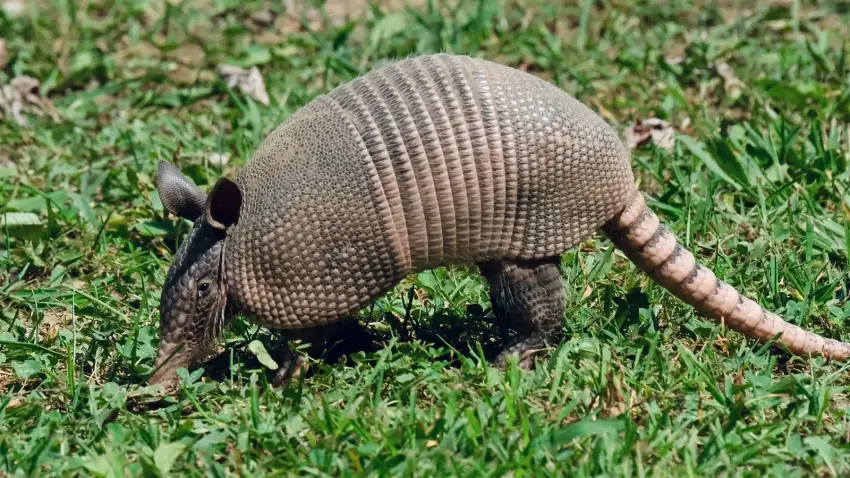
You found armadillo holes in the lawn, and somewhere you read that armadillos carry leprosy. Some do. This page has the Florida numbers by county, read from the Department of Health on November 24, 2026, and what the CDC says the risk to you is.
Key takeaways
- The Florida Department of Health counts 20 leprosy (Hansen's disease) cases reported statewide in 2024. Its 2025 figure is 36, which is preliminary and can still change.
- Volusia County had the most in 2025, with 8 (preliminary). Brevard has the most over 2020 to 2025, with 43.
- The CDC says the risk of catching leprosy from an armadillo is very low, and most people who come into contact with one are unlikely to get it.
- Don't pick an armadillo up or handle a dead one bare-handed.
- For an armadillo in the yard, call a wildlife company. For a health worry, call your doctor or county health department.
Armadillo in the yard today? Get Your Free Estimate or call 800-932-7287.
Should you worry about leprosy from armadillos?
Not much. The CDC says some armadillos in the southern United States are naturally infected with the bacteria that cause leprosy, and that they may be able to spread it to people, but "the risk is very low." It also says around 95% of people cannot get leprosy because their immune system fights it off.
Florida had 20 reported cases in 2024. Those are people with the disease from any source. The state does not count how many came from armadillos.
Leprosy cases by Florida county, 2020 to 2025
These are Florida Department of Health counts for every county with at least one case in those six years; the other 36 counties had none. Tap a column heading to sort. A county here is where the person lived when the disease was identified. It is not where they caught it.
| County | 2020 | 2021 | 2022 | 2023 | 2024 | 2025 | Six years |
|---|---|---|---|---|---|---|---|
| Bay | 1 | 0 | 0 | 1 | 0 | 0 | 2 |
| Bradford | 0 | 0 | 1 | 0 | 0 | 0 | 1 |
| Brevard | 20 | 5 | 3 | 7 | 2 | 6 | 43 |
| Broward | 0 | 1 | 0 | 0 | 0 | 2 | 3 |
| Charlotte | 0 | 1 | 0 | 1 | 0 | 0 | 2 |
| Collier | 0 | 0 | 0 | 0 | 2 | 0 | 2 |
| Duval | 0 | 1 | 1 | 0 | 1 | 1 | 4 |
| Flagler | 0 | 0 | 0 | 2 | 0 | 0 | 2 |
| Highlands | 0 | 0 | 0 | 1 | 0 | 0 | 1 |
| Hillsborough | 0 | 1 | 0 | 1 | 0 | 1 | 3 |
| Jackson | 0 | 0 | 0 | 0 | 0 | 1 | 1 |
| Lake | 0 | 0 | 0 | 0 | 1 | 2 | 3 |
| Lee | 0 | 0 | 0 | 1 | 0 | 0 | 1 |
| Leon | 0 | 0 | 1 | 0 | 0 | 1 | 2 |
| Levy | 1 | 0 | 0 | 0 | 0 | 0 | 1 |
| Liberty | 0 | 0 | 0 | 0 | 0 | 1 | 1 |
| Marion | 0 | 0 | 0 | 1 | 0 | 1 | 2 |
| Martin | 0 | 0 | 0 | 0 | 0 | 1 | 1 |
| Miami-Dade | 0 | 0 | 0 | 0 | 0 | 3 | 3 |
| Okeechobee | 0 | 1 | 0 | 0 | 0 | 0 | 1 |
| Orange | 0 | 0 | 0 | 0 | 1 | 0 | 1 |
| Palm Beach | 0 | 1 | 0 | 1 | 1 | 1 | 4 |
| Pinellas | 0 | 0 | 0 | 1 | 1 | 0 | 2 |
| Polk | 1 | 1 | 0 | 0 | 3 | 1 | 6 |
| Sarasota | 1 | 0 | 0 | 0 | 2 | 1 | 4 |
| Seminole | 1 | 1 | 0 | 1 | 1 | 1 | 5 |
| St. Johns | 1 | 1 | 0 | 0 | 1 | 3 | 6 |
| Sumter | 0 | 0 | 1 | 0 | 1 | 0 | 2 |
| Taylor | 1 | 0 | 0 | 0 | 0 | 0 | 1 |
| Union | 0 | 0 | 0 | 0 | 0 | 1 | 1 |
| Volusia | 0 | 0 | 1 | 5 | 3 | 8 | 17 |
| Florida | 27 | 14 | 8 | 23 | 20 | 36 | 128 |
Most counties see between 0 and 3 cases a year, so one extra case can look like a surge. The Department itself warns that rates built on fewer than 20 cases are not reliable.
Leprosy cases in Florida by year
Statewide reports ran from a low of 8 in 2022 to a preliminary high of 36 in 2025. In between there is no steady climb: 29 cases in 2015, 17 in 2017, 27 in 2020.
Lighter bar: 2025, preliminary. Source: Florida Department of Health.
What does CDC say about armadillos and how leprosy spreads?
Mostly it spreads between people, and slowly. The CDC says you need prolonged, close contact with someone who has untreated leprosy, over many months. Signs can take up to 20 years to show after contact with the bacteria.
The armadillo route is less certain. The CDC's clinical overview says several cases in the southern United States were likely contracted from armadillos. Its case definition names prolonged or frequent direct contact, meaning things like raising, hunting, butchering or eating them, and says it does not mean brief or sporadic touching. The Florida Department of Health calls infected nine-banded armadillos "an uncommon source of infection."
The Department also says some research suggests the bacteria may survive for a time in soil, and that gloves are a simple precaution for anyone working in it.
What to do, and not do, around armadillos and burrows
- Don't pick one up, alive or dead, and keep the dog off it.
- Wear gloves when you fill feeding holes or dig near a burrow. The Department of Health gives that advice for soil generally.
- Don't block a burrow with an animal inside. If the opening is a half-moon shape it may be a protected gopher tortoise.
- If you handled an armadillo and have a skin patch or numbness that worries you, ask a doctor. We can't advise on that.
A burrow against a slab or AC pad is the more likely cost to you. Our armadillo removal page covers trapping the animal, filling the burrow and putting in a barrier.
Who may handle an armadillo in Florida?
The Florida Fish and Wildlife Conservation Commission says a landowner may lawfully live-trap or humanely destroy a nuisance armadillo, and limits where a trapped one can go. The rules, including release, are in our post on armadillo trapping law in Florida. FWC also lists leprosy among the diseases armadillos can carry.
Is it an armadillo at all?
Skunks, raccoons, squirrels and moles dig up lawns too. Our guide to armadillo holes in Florida yards compares the damage side by side.
Sources and method
Counts for 2015 to 2024 come from the FLHealthCHARTS Ten Year Report for Hansen's disease. For 2025 we ran the Department's Reportable Diseases Frequency Report for Hansen's disease (Leprosy), all 67 counties, report dates January 1 to December 31, 2025. Both were read on November 24, 2026, and the county rows add up to the state total in every year shown.
Cases are counted by the date they were reported to the state. The Frequency Report says its counts include confirmed and probable cases and calls them preliminary. The two tools differ on one case: the Ten Year Report has 14 for 2021, including one in Seminole County, and the Frequency Report has 13. We used the Ten Year Report.
Burrow under the slab, or fresh holes every morning? Get Your Free Estimate or call 800-932-7287.
Quoting a figure? Cite this page ShowHide
Dr. Critter Wildlife Control. "Armadillos and Leprosy in Florida: Cases by County and What to Do About One in Your Yard." Published November 24, 2026. https://drcritter.com/blog/armadillos-and-leprosy-in-florida/
Link: <a href="https://drcritter.com/blog/armadillos-and-leprosy-in-florida/">Armadillos and Leprosy in Florida: Cases by County and What to Do About One in Your Yard</a>, Dr. Critter Wildlife Control
Case counts are Florida Department of Health data. You may republish these figures with attribution and a link to https://drcritter.com/blog/armadillos-and-leprosy-in-florida/.
Photo by A. G. Rosales on Pexels
Armadillos and Leprosy in Florida:…


Florida Nuisance Wildlife Laws by…
October 20, 2026
Does Homeowners Insurance Cover…
October 13, 2026


Armadillo Holes in Your Florida…
October 6, 2026
Who to Call for Wildlife in…
September 22, 2026


Florida Rabies Cases by County and…
September 15, 2026
Wildlife Removal Cost in Central…
September 15, 2026


Wildlife Removal vs Pest Control:…
August 11, 2026
Central Florida Wildlife Activity…
August 11, 2026


Rats in Your Attic Could Be More…
August 5, 2026