October 20, 2026
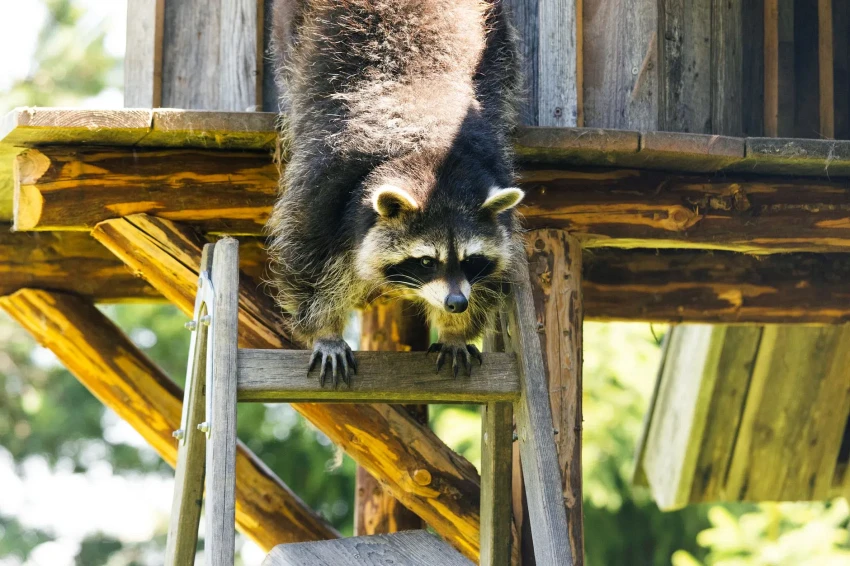
Wildlife Control vs. Pest Control: Which One Do You Actually Need in Central Florida?
You hear scratching in the attic at 3 a.m. You find droppings in the garage that aren't from mice. You glimpse something larger than a rat slipping under the deck. Your first instinct is to grab the phone — but who do you actually call?
Most Central Florida homeowners reach for a pest control company because that's the name they know. About half of those calls end in a referral to someone else, because pest control and wildlife control are two different trades doing two different jobs. Calling the wrong one wastes a service visit, sometimes burns a few hundred dollars on a treatment that legally can't work on the animal in your house, and delays the actual fix.
The Core Difference in One Sentence
Pest control handles insects and rodents using chemical and bait-based treatments. Wildlife control handles vertebrate animals — raccoons, bats, snakes, squirrels, opossums, armadillos — using trapping, hand removal, and structural exclusion.
If the animal has fur, scales, or feathers, you almost always need a wildlife company. If it has six legs and a body smaller than a pencil eraser, you almost always need pest control. Rodents are the gray zone, covered further down.
What Pest Control Companies Can't (and Won't) Do
A licensed pest control company in Florida is set up to do one core thing well: apply EPA-registered pesticides to control insects and, separately, deploy rodenticides under their license. They have inventory and training built around that work. They are not legally or practically equipped to:
- Trap, remove, or relocate raccoons, bats, opossums, squirrels, armadillos, or protected snakes. Florida wildlife handling is governed by FAC 68A-4.001 and 68A-9.010, which set what may be taken and where it may be released. A structural pest licence is not written for any of that. FWC's Nuisance Wildlife program spells out the requirements.
- Do exclusion work — sealing soffit gaps, repairing chewed fascia, installing chimney caps, screening attic vents. This is carpentry-and-screen work, not chemical application. Pest control companies almost never carry the materials or the experience.
- Treat bats during maternity season. Florida law prohibits all bat exclusion between April 16 and August 14 under FAC 68A-9.010 to protect pups too young to fly. This rule applies to every operator regardless of license type — and a pest control company offering to "spray for bats" is offering something illegal in any month.
- Sanitize attics contaminated by wildlife. Raccoon latrines, bat guano, and rodent nesting material carry Baylisascaris roundworm, histoplasmosis spores, and leptospirosis bacteria. The cleanup requires HEPA respirators, enzyme-based treatments, and insulation replacement — not a pesticide application.
Some larger pest control franchises advertise "wildlife services" by partnering with or owning a separate wildlife division. That can work fine — just verify the technician arriving at your house holds the actual FWC credential and isn't a pest tech sent on a side errand.
What Wildlife Control Companies Handle
A wildlife control company is built around vertebrate removal and structural exclusion. The day-to-day work is inspection, trapping, exclusion install, and remediation — not chemistry. In Central Florida, the species mix typically runs:
- Raccoons in attics, dumpsters, chimneys, and crawl spaces.
- Squirrels chewing soffit and fascia to nest in eave cavities.
- Bats roosting under tile, behind shutters, and in attic voids.
- Snakes on the property, in garages, under pool decks, and occasionally indoors.
- Opossums in crawl spaces and under decks.
- Armadillos rooting up turf and digging burrows under foundations.
- Rats and roof rats in attics and wall voids — the species pest control also treats. See the next section.
A typical wildlife job looks like this: inspect the entire structure for entry points, set traps or perform hand removal, install one-way exclusion devices so animals can leave but not return, seal every gap larger than a half-inch with stainless mesh and structural fasteners, then return for follow-up and remediation if there's contaminated insulation. None of that is pest control work.
The Gray Zone: Rats and Mice
Rodents are the one category both trades legitimately handle, and the right choice depends on what you actually want fixed.
Call pest control for: a quick rodent population reduction when you don't yet have structural damage — a bait station program, snap-trap deployment in a contained area, and exterior perimeter treatment.
Call wildlife control for: a rat or mouse problem that already involves the attic — chewed wiring, soiled insulation, gnaw marks around plumbing penetrations, droppings on stored items. The fix isn't more bait; it's finding the holes, sealing them, replacing insulation, and verifying with a follow-up inspection. Dr. Critter's rodent removal program is designed around the exclusion-first approach because bait alone in an attic just creates dead-rodent smell problems three weeks later.
If you've already been on a quarterly pest control plan for years and the rats are back every winter, the underlying issue is almost always a structural gap that bait can't close.
Florida-Specific Situations That Need a Wildlife Operator Rather Than a Pest Company
A few scenarios in Central Florida have legal requirements beyond "call any handyman":
- Bats anywhere on the property. All Florida bat species are protected. Exclusion is legal only outside maternity season (April 16 – August 14) and only by operators following FWC-approved one-way devices. We cover this in detail in Florida Bat Removal Laws: What Homeowners Must Know.
- Eastern diamondback rattlesnakes, cottonmouths, coral snakes. Venomous removal calls require trained handlers with the right gear — not a pest control sweep.
- Protected species — gopher tortoises, certain wading birds, federally protected migratory birds nesting in eaves. Even removing a nest can violate state or federal law without the right paperwork.
- Alligators. These go through Florida's Statewide Nuisance Alligator Program (SNAP), not pest control and not a wildlife company. Call FWC's nuisance alligator hotline at (866) 392-4286.
Red Flags When Hiring Either Type of Company
- "We'll poison the raccoons / bats / squirrels." Florida law does not allow toxicant use on non-target wildlife. Anyone offering this either misunderstands their license or is operating outside it.
- No exclusion work, just trapping. A trap-only approach without sealing entry points is a guaranteed repeat visit — and a repeat invoice. Wildlife flows in to fill any empty cavity.
- "Lifetime guarantee" with no exclusion documented. A guarantee is only worth as much as the seal work it's backed by. Ask for photos of completed exclusion points.
- Claiming a state wildlife trapper licence. There is no such thing, and an operator who says otherwise is either confused or counting on you being. FWC does not license nuisance wildlife control operators; it keeps a voluntary directory an operator adds themselves to with a web form. Pest control is the licensed half of this picture, under the Florida Department of Agriculture and Consumer Services, and that structural pest licence is a real card a technician should be able to produce on request. Ask a wildlife company about its FWC directory listing, its insurance and its warranty instead, because those are things that actually exist.
- Treatment quoted without inspection. No reputable wildlife company quotes a job without seeing the attic, soffit line, and entry points first.
Dr. Critter's Approach: Why We Don't Use Pesticides
Dr. Critter is a wildlife-only company. We have worked Central Florida wildlife continuously since 1996 and are registered with FWC as a nuisance wildlife control operator. We don't carry pesticides, don't bid pest control work, and don't treat insects — because the right answer for an insect problem is a pest control company, and we won't pretend otherwise.
What we do is the opposite of chemistry: physical removal, mechanical exclusion, and remediation. Trap the animal, find every entry point, seal the structure with stainless steel mesh and structural-grade fasteners, replace contaminated insulation, sanitize affected surfaces, and back the seal work with a written warranty. If the issue is actually pest-related and we discover that during inspection, we'll tell you and recommend a pest company — same way we'd hope a reputable pest control company tells you to call us if they walk into a raccoon job.
Frequently Asked Questions
Can pest control companies remove raccoons?
Usually not, and it is a scope question rather than a licence-number one. A structural pest licence under Chapter 482 covers insects and commensal rodents; a raccoon in an attic is protected wildlife whose removal and disposition are governed by FAC 68A-4.001 and 68A-9.010. A pest control company quoting raccoon removal is normally subcontracting it to a wildlife operator, and it is worth asking which one.
Will pest control kill rats in my attic?
Bait stations will reduce the population, but rats will keep returning as long as the structural gaps that let them in remain open. For a permanent fix, the exclusion work — which is wildlife control's specialty — has to come first.
Is there a service that does both pest control and wildlife removal?
Some larger franchises offer both through separate divisions. The key question is whether the technician arriving at your house holds the actual FWC wildlife credential for the specific job, or whether they're a pest tech being asked to handle work outside their training.
How do I know which one I need?
If you can see, hear, or smell something larger than an insect, call a wildlife company first. They can identify the species during inspection and refer you to pest control if it turns out to be an insect or pure rodent issue. Going the other direction — calling pest control first for a vertebrate problem — almost always wastes a visit.
Not sure which one you need?
Tell us what you're hearing, seeing, or smelling. If it's not wildlife, we'll point you to the right pest control company. No referral fees, no upsell.
Older take on the same question, kept for reference:pest control vs wildlife control — which do you need.
Florida Nuisance Wildlife Laws by…


Does Homeowners Insurance Cover…
October 13, 2026
Armadillo Holes in Your Florida…
October 6, 2026


Who to Call for Wildlife in…
September 22, 2026
Florida Rabies Cases by County and…
September 15, 2026


Wildlife Removal Cost in Central…
September 15, 2026
Florida Nuisance Wildlife Trapping…
August 18, 2026


Wildlife Removal vs Pest Control:…
August 11, 2026
Central Florida Wildlife Activity…
August 11, 2026


Rats in Your Attic Could Be More…
August 5, 2026